
You wake up with a scratchy throat on one side. There’s no cough, no runny nose and no fever, just a dull ache that makes every swallow feel like a chore. You gargle, sip warm tea and wait it out, but the pain keeps coming back. The problem may not be your throat at all. It could be a wisdom tooth.
That might sound far-fetched, but impacted wisdom teeth are common. In a review of 2,000 dental X-rays from Emirati patients, 23% had at least one impacted lower wisdom tooth, which is nearly one in four. A tooth stuck under the gum traps food and bacteria and can cause an infection called pericoronitis. The swelling and inflammation at the back of the jaw can then spread to the tissues around your throat. It can tighten the jaw muscles, make swallowing painful and send pain to your ear and neck.
So yes, wisdom teeth can cause a sore throat, and treating it like a cold only delays the real fix.
In this guide, we cover how wisdom teeth trigger throat pain, how to tell it apart from strep or a viral sore throat, the warning signs that need urgent care, how a dentist treats the problem, and what you can do for relief in the meantime. Keep reading to find out whether your sore throat is coming from your mouth.
Why Wisdom Teeth Sit So Close to the Throat

Wisdom teeth, also called third molars, are the last teeth to come in. They sit at the very back of the upper and lower jaw and usually try to emerge between the late teens and mid-twenties. By then the other teeth have taken most of the space. Many wisdom teeth come in crooked, stay half-covered by gum, or never break through the jaw.
Where they sit is what matters for the throat. The lower ones are at the back corner of the jaw, not far from the tonsil area and the side wall of the throat. Only a thin layer of soft tissue separates them from the parts used for swallowing. Three things explain why a tooth problem here can feel like a throat problem:
- Shared soft tissue: The gum behind a lower wisdom tooth merges into the soft tissue at the back of the mouth. When it swells or gets infected, the problem can spread toward the throat instead of staying around the tooth.
- Nearby jaw muscles: The muscles that open, close and move the jaw sit right next to the back molars. When they get inflamed or tight, the pain can be felt deep in the throat and swallowing becomes uncomfortable.
- Overlapping nerve pathways: The nerves serving the back teeth, jaw, ear and throat are closely linked. The brain can’t always tell where the pain is really coming from, so a tooth problem often shows up as throat or ear pain.
How Wisdom Teeth Can Cause a Sore Throat
Wisdom teeth don’t cause throat pain in just one way. Infection, pressure, muscle strain and swelling can each play a part, and they often overlap. These are the main routes.
Pericoronitis
This is the most common cause. When a wisdom tooth only partly breaks through, a small flap of gum stays over part of the crown. Food and bacteria get trapped under that flap and are very hard to clean out. The gum becomes red, swollen and sore, and it can start leaking pus. Because the flap sits at the very back of the mouth, the swelling and irritation often spread to the tissue near the throat. The result is a sore throat, usually on one side, along with a bad taste and pain when swallowing.
Wisdom Teeth Pressing on Surrounding Tissue
An impacted tooth is stuck under the gum or in the jaw and can’t come in properly. It may press against the neighboring molar, the jawbone and the soft tissue around it. This constant pressure causes inflammation, which can show up as a dull ache at the back of the jaw that spreads toward the throat and ear. The tooth doesn’t have to be infected for this to happen, and some people feel the discomfort in the throat before noticing anything in the tooth itself.
Infection Spreading to the Throat and Neck Tissues
An untreated infection around a wisdom tooth doesn’t always stay local. Bacteria can move into the soft tissue spaces beside the jaw and throat, causing swelling, pain and tenderness. The glands under the jaw and along the neck often react by becoming swollen and sore, and this can easily be mistaken for a throat infection. Most cases stay mild, but this is how a tooth problem can become a more serious infection, which is why it deserves attention.
Jaw Muscle Tension and Referred Pain
Pain from a problem wisdom tooth makes the jaw muscles tighten, especially the ones used for chewing. Tense, inflamed muscles near the back of the jaw can produce pain that is felt in the throat. This is called referred pain, meaning the discomfort shows up away from its real source. It often feels like a deep, aching soreness that gets worse when chewing, yawning or opening the mouth wide.
Swelling That Makes Swallowing Painful
When the gum and surrounding tissue swell, the space at the back of the mouth gets tighter. Swallowing then moves food, liquid and saliva past a tender, inflamed area, which hurts. In more significant cases, the swelling also makes it hard to open the mouth fully, a condition called trismus. Painful swallowing combined with a stiff, limited jaw is a strong sign that the cause is dental.
Bad Taste, Drainage and Throat Irritation From an Infected Tooth
An infected wisdom tooth or gum can release pus and bacteria into the mouth. This leaves a foul taste and bad breath that doesn’t go away with brushing. The drainage runs toward the back of the mouth and can irritate the throat, causing a raw, scratchy feeling or a constant urge to clear it. Since the irritation comes from the tooth area, throat lozenges and sprays usually bring only brief relief.
Symptoms That Point to Wisdom Teeth as the Cause

A sore throat on its own says very little. The pattern of symptoms around it is what matters. When several of the signs below appear together, especially around the back of the mouth, a wisdom tooth becomes a likely suspect.
- Sore throat on one side only: Colds and flu usually cause throat pain on both sides. Pain that stays on one side, matching the position of a back tooth, is one of the clearest hints that the source is dental.
- Red, swollen or tender gums at the back: The gum around a problem wisdom tooth often looks puffy and feels sore when touched. It may bleed during brushing, and a flap of gum partly covering the tooth is a common spot where bacteria collect.
- Jaw pain, stiffness or trouble opening the mouth: An aching jaw, pain while chewing, or difficulty opening wide usually goes with an infected or impacted wisdom tooth. A throat infection rarely limits jaw movement this way.
- Bad breath, a foul taste or pus: A bad taste that returns soon after brushing, or a salty, bitter fluid leaking from the gum, points to infection around the tooth. This is hard to explain with an ordinary sore throat.
- Earache on the same side: Ear pain without an actual ear infection is a classic sign of referred pain from a back tooth. The ear, teeth and throat share nerve pathways, so pain from one area is often felt in the others.
- Swollen glands under the jaw: Tender lumps under the jaw or along the neck show that the body is fighting an infection nearby. Swollen glands also appear with throat infections, so they matter most when combined with the signs above.
One symptom alone doesn’t confirm a wisdom tooth problem. Three or more together, or a sore throat that keeps returning in the same spot, are good reasons for a dental check.
Wisdom Tooth Sore Throat vs. a Regular Sore Throat

Most sore throats come from viruse like the common cold or flu, and some come from bacteria like strep. A wisdom tooth sore throat can feel almost identical at first, which is why it often gets treated with lozenges and tea for weeks. Here is how the three compare.
Wisdom tooth sore throat
- Sides affected: Usually one side.
- Cold symptoms: Cough, runny nose and sneezing are typically absent.
- Fever: Uncommon, but possible if the infection is spreading.
- Throat and tonsils: Tonsils usually look normal.
- Mouth and jaw: Gums at the back are red, swollen or tender. The jaw may feel stiff or painful, and a bad taste or breath is common.
- Duration and relief: Comes and goes, or lingers for weeks. Lozenges and sprays bring brief relief or none.
Viral sore throat (cold or flu)
- Sides affected: Usually both sides.
- Cold symptoms: Cough, runny nose and sneezing are common.
- Fever: Common with flu, mild with colds.
- Throat and tonsils: Tonsils may be mildly red.
- Mouth and jaw: Gums look normal and the jaw moves freely. A bad taste is rare.
- Duration and relief: Improves within about a week. Lozenges and sprays ease the symptoms.
Strep throat
- Sides affected: Both sides.
- Cold symptoms: Cough, runny nose and sneezing are typically absent.
- Fever: Common and often sudden.
- Throat and tonsils: Tonsils are red and swollen, sometimes with white patches.
- Mouth and jaw: Gums look normal and the jaw moves freely. A bad taste is occasional.
- Duration and relief: Improves within days of antibiotics. Lozenges and sprays ease the symptoms only.
The Clues That Matter Most
- No cold symptoms. Throat pain without a cough, runny nose or sneezing makes a viral cause less likely.
- Pain that keeps returning in the same spot. A viral sore throat clears up within about a week. A wisdom tooth problem tends to flare up, settle down and flare up again.
- Symptoms in the mouth, not just the throat. Gum swelling, jaw stiffness and a bad taste do not appear with a cold or strep, and they point directly to the tooth.
- Little or no relief from throat remedies. When lozenges, gargles and sprays make no real difference, the source of the pain is probably somewhere else.
A sore throat can also come from a wisdom tooth and an infection at the same time, so a throat that doesn’t improve is worth checking in the mouth as well as the throat.
Which Wisdom Tooth Problems Are Most Likely to Cause Throat Pain?
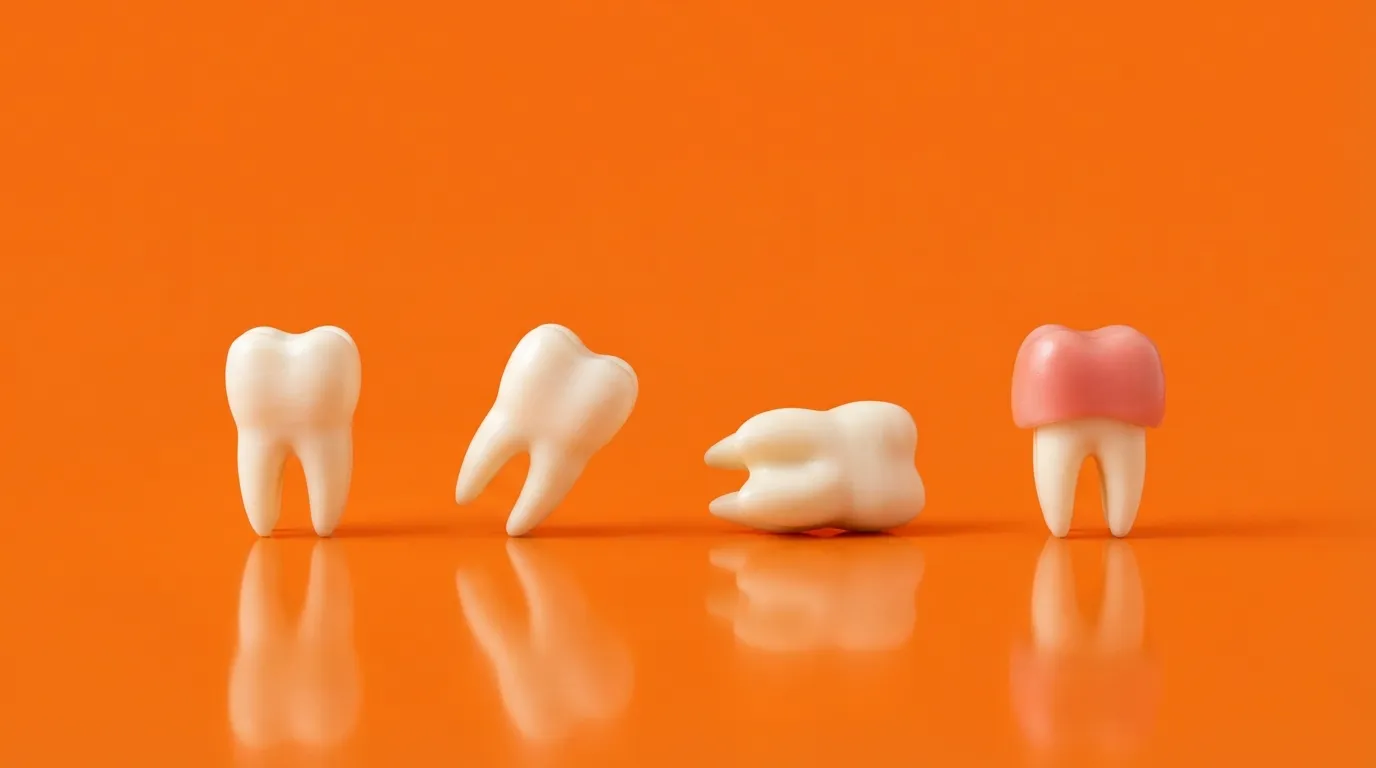
Not every wisdom tooth leads to a sore throat. Teeth that come in straight, fully emerge and are easy to clean usually cause no trouble. The problems below are the ones most often linked to throat pain.
- Partially erupted teeth: This is the biggest culprit. A tooth that has only partly broken through leaves a gap under the gum where food and bacteria collect and are hard to clean out. This often leads to pericoronitis, the gum infection that can spread toward the throat. It is most common in the lower wisdom teeth and in people in their early to mid-twenties, when these teeth are still coming in.
- Impacted teeth, especially angled or sideways ones: A tooth stuck under the gum or in the jaw can press on the neighboring molar and surrounding tissue. Teeth tilted forward or lying sideways are often the hardest to clean and are more likely to cause pain, swelling and infection near the back of the jaw.
- Teeth with decay that is hard to clean: Wisdom teeth sit so far back that brushing and flossing rarely reach them properly. Decay can develop on the tooth itself or on the molar next to it, and a deep cavity can turn into an abscess. The pain and swelling from an abscess can spread toward the throat and jaw.
- Wisdom teeth emerging in adulthood: Some wisdom teeth stay hidden for years and start moving in the late twenties, thirties or later. Because the tooth breaks through an adult gum with little room available, the area can become inflamed and infected, and the first sign is often a sore throat that seems to have no cause.
A wisdom tooth doesn’t need to hurt to be causing trouble. A tooth that feels fine can still have swollen gum or hidden decay around it, which is why throat pain with no clear cause deserves a look at the back teeth.
Warning Signs That Need Urgent Attention

Most wisdom tooth throat pain is uncomfortable but manageable. In rare cases, though, the infection spreads into the deeper spaces of the face and neck, where it can become dangerous quickly. The signs below mean waiting is not safe.
- Difficulty breathing: Any trouble breathing, a feeling that the throat is closing, or noisy breathing needs emergency care straight away. Swelling near the throat can narrow the airway.
- Difficulty swallowing: Pain when swallowing is common with a wisdom tooth problem. Being unable to swallow food, liquid or even saliva, or drooling because swallowing is too painful, is a serious warning sign.
- Rapidly spreading swelling: Swelling that grows over hours across the cheek, jaw, under the chin or down the neck suggests the infection is moving. Swelling under the tongue or along the floor of the mouth is especially concerning.
- High fever with severe pain: A high temperature, chills and intense pain together show that the body is struggling to contain the infection. This is different from the mild discomfort of a simple gum infection.
- Severe jaw stiffness: When the mouth can barely open, even enough to eat or drink, the infection may have reached the deeper jaw muscles.
- A change in voice or feeling very unwell: A muffled voice, extreme weakness, confusion or a racing heartbeat alongside the symptoms above points to a serious infection.
Infections like these are uncommon, but they can become life-threatening if left untreated, which is why a tooth-related sore throat should never be ignored once any of these signs appear. If breathing or swallowing is affected, go to the nearest emergency department. For the milder symptoms, see a dentist as soon as possible.
How a Dentist Confirms Wisdom Teeth Are Behind a Sore Throat

A dentist can usually tell within one visit whether the throat pain starts in the mouth. The visit follows four stages.
Stage 1: The conversation
What happens: The dentist asks which side hurts, when the pain began, whether it comes and goes, and whether there is a bad taste, ear pain or trouble opening the mouth.
What it shows: One-sided pain that keeps returning, together with mouth symptoms, points to the tooth before any examination begins.
Stage 2: The mouth examination
What happens: The dentist checks the gum around the back teeth for redness, swelling, pus or a flap of tissue covering the tooth. Gentle pressure tests how tender the area is, and the jaw is checked for stiffness.
What it shows: A swollen, tender gum at the back of the mouth confirms local inflammation or infection around a wisdom tooth.
Stage 3: The neck and throat check
What happens: The glands under the jaw and along the neck are felt for swelling, and the back of the throat gets a brief look.
What it shows: Normal-looking tonsils alongside a swollen gum make the tooth the likely source. Swollen glands show the body is reacting to an infection nearby.
Stage 4: The X-ray
What happens: A panoramic X-ray captures all the wisdom teeth in one image. In more complex cases, a 3D scan gives a more precise view of the tooth’s position.
What it shows: Whether the tooth is impacted, which way it is tilted, how deep it sits, and whether there is decay or infection around it.
If the throat looks inflamed but the teeth look healthy, the dentist may suggest a visit to a doctor for a throat check or strep test. If both problems are present, each is treated separately.
How a Wisdom Tooth Problem Is Treated

Once the tooth is confirmed as the cause, treatment depends on what the dentist finds.
- Cleaning and drainage: For pericoronitis, the dentist flushes out the food and bacteria trapped under the gum flap and drains any pus. This often brings quick relief.
- Antibiotics and pain relief: Antibiotics are prescribed when the infection is spreading or comes with fever or swollen glands. Mild cases may not need them. Antibiotics should only be taken as prescribed by a dentist or doctor.
- Monitoring: A wisdom tooth that is healthy and causing no symptoms may simply be watched with regular checkups and X-rays.
- Removal: The dentist may recommend taking the tooth out if infections keep returning, if the tooth is impacted and damaging the neighboring molar, or if decay can’t be treated. Once the area heals, the throat pain linked to that tooth usually stops.
Temporary Relief at Home Until You See a Dentist

Home care can make a wisdom tooth sore throat more bearable while waiting for an appointment, but it only calms the symptoms. The infection and the tooth behind it still need a dentist. These steps make the biggest difference.
- Rinse with warm salt water, not just lozenges. Half a teaspoon of salt in a glass of warm water, swished gently around the back of the mouth and spat out, can be done several times a day, especially after meals. It loosens trapped food and eases swelling in the gum.
- Use a cold compress, not a hot pack. Wrap cold in a cloth and hold it against the outside of the cheek for 15 to 20 minutes at a time. This helps reduce swelling and dull the pain. Heat on a swollen, infected area can make it worse.
- Clean the area gently, without poking it. A soft toothbrush, used carefully around the back tooth, removes food and plaque without irritating the gum further. Avoid fingers and toothpicks.
- Take pain relief by mouth, not on the gum. Over-the-counter options like ibuprofen or paracetamol, taken as the label directs and only if safe for the person, work far better. A tablet held against the gum can burn the tissue.
- Choose soft, lukewarm meals. Chewing on the opposite side keeps pressure off the sore area, and very hot, crunchy or spicy food irritates an already inflamed throat and gum.
- Avoid smoking and alcohol-based mouthwash. Smoking slows healing, and alcohol-based rinses sting inflamed tissue.
- Book the dental visit instead of waiting for it to pass. If symptoms don’t improve in a day or two, or any warning sign from the earlier section appears, home care is no longer enough.
When to See a Dentist and When to See a Doctor

A sore throat can start in the mouth or in the throat itself, so the other symptoms that come with it usually point to the cause.
See a dentist when
- The pain stays on one side and lines up with a back tooth.
- The gum at the back of the mouth is red, swollen or tender.
- You notice a bad taste, bad breath or pus near a wisdom tooth.
- Your jaw feels stiff, or opening wide hurts.
- You have ear pain but no sign of an ear infection.
- The sore throat lasts more than a week or keeps coming back, and you have no cold symptoms.
See a doctor when
- A cough, runny nose, sneezing or body aches come with the sore throat.
- Your tonsils are red and swollen, with white patches.
- A fever starts suddenly and both sides of the throat hurt.
- Your gums and teeth look healthy and your jaw moves normally.
- You may need a strep test to rule out a bacterial infection.
- The throat pain continues after dental treatment.
When to go to the emergency department
Go straight to an emergency department if you have trouble breathing or swallowing, or if swelling spreads quickly across your face or neck.
A tooth problem and a throat infection can also happen at the same time. If your signs are mixed, start with the specialist whose symptoms match best, and see the other if the pain continues.
Can Wisdom Tooth Throat Pain Be Prevented?
Partly. Whether a wisdom tooth comes in straight or gets stuck depends on how much room the jaw has, and good habits can’t change that. What you can reduce is the risk of infection and swelling around the tooth, which is what causes the throat pain. Four common beliefs get in the way of that.
Myth: Wisdom tooth problems can be prevented completely.
Fact: Impaction comes from jaw space and tooth position, not from poor habits. Good care lowers the risk of infection, but a tooth that is stuck or partly erupted stays a risk and needs monitoring.
Myth: If the tooth doesn’t hurt, nothing is wrong.
Fact: A wisdom tooth can have swollen gum or hidden decay around it without causing pain. Regular dental checkups, with an X-ray when your dentist advises one, show how the teeth are developing. They also catch problems before they reach the throat.
Myth: Normal brushing cleans the back teeth.
Fact: Wisdom teeth sit so far back that they are easy to miss. To keep food and bacteria from collecting under the gum flap, use:
- A small-headed soft toothbrush, angled toward the back
- Floss or a small interdental brush
- A rinse after meals
Myth: Mild gum swelling at the back can wait.
Fact: Early swelling is the easiest stage to treat. Warm salt water rinses and a prompt dental visit can stop a small irritation from turning into an infection that spreads toward the throat.
The bottom line
Wisdom teeth that are watched and kept clean are far less likely to cause the kind of infection that ends up as a sore throat.
FAQs
Can a wisdom tooth cause a sore throat on only one side?
Yes. The pain usually stays on the same side as the problem tooth, which is one of the clearest clues. Colds and flu typically affect both sides of the throat.
Can wisdom teeth cause swollen glands in the throat?
Yes. The glands under the jaw and along the neck often swell when there is an infection around a wisdom tooth. Throat infections cause the same swelling, so it is most meaningful when it appears with gum swelling, jaw stiffness or a bad taste.
Can an impacted wisdom tooth cause ear and throat pain together?
Yes. The teeth, ear and throat share nerve pathways, so pain from a back tooth is often felt in the ear and throat at the same time. This is called referred pain.
Can wisdom teeth cause difficulty swallowing?
They can. Swelling at the back of the mouth and tight jaw muscles make swallowing uncomfortable. Being unable to swallow even saliva, or any trouble breathing, is an emergency and needs immediate medical care.
How long does a wisdom tooth sore throat last?
It depends on the cause and the treatment. Once the infection around the tooth is treated, the throat pain often eases within a few days. Without treatment, it tends to linger or keep returning for weeks.
Can wisdom teeth cause a sore throat without tooth pain?
Yes. Swollen or infected gum around a partly erupted wisdom tooth can cause throat or ear discomfort long before the tooth itself aches. That is why throat pain with no cold symptoms is worth a dental check.
Will a sore throat go away on its own if a wisdom tooth is the cause?
Mild irritation may settle for a while, but the cause is still there. Trapped bacteria around the tooth usually bring the pain back, and the infection can get worse, so a dental visit is the safer choice.
Conclusion
Wisdom teeth can cause a sore throat, though usually not directly. The pain comes from infection, swelling, pressure and tight jaw muscles at the back of the mouth, which sits close to the throat. The clues are a sore throat on one side, a swollen gum at the back, jaw stiffness, a bad taste, ear pain, and no cough or runny nose.
Throat remedies can ease the discomfort, but they don’t touch the tooth behind it. Warning signs like trouble breathing or swallowing, or swelling that spreads quickly, need emergency care. For everything milder, the best step is a dental checkup with an X-ray, which shows whether a wisdom tooth is the cause.
If a sore throat keeps returning, stays on one side, or shows up with jaw and gum symptoms, don’t keep treating it as a throat problem. Book a dental visit, and get the back teeth checked before a small irritation turns into a bigger infection.