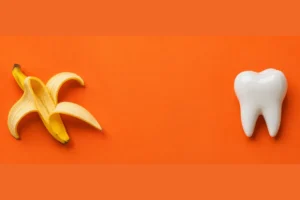
Wondering if you can eat a banana after teeth whitening? Learn why it is considered safe, when to eat it, and how to enjoy it without sensitivity or staining.
You’ve just finished your teeth whitening session, your teeth look brighter than ever, and then hunger hits. A banana is the easiest snack within reach, but you stop and wonder if it could undo your results. You’re not alone in asking. In Dubai, whitening is a very popular treatment, and one Dubai dentist told Gulf News that more than half of his patients are interested in whitening. The same report notes that sensitive teeth and gums are a common temporary side effect, lasting anywhere from a few hours to a few days.
So can you eat a banana after teeth whitening? In most cases, yes. A banana is light in color, soft, and gentle on sensitive teeth, which makes it one of the safer snacks to reach for. The details still matter, though, including when you eat it, what temperature it is, and what you pair it with.
In this blog, we will cover why bananas are considered whitening-friendly, how long to wait before your first bite, and whether bananas are acidic or can stain. We will also look at the best and worst banana pairings, a step-by-step way to eat one safely, and what to do if your teeth feel sensitive.
Can You Eat a Banana After Teeth Whitening? The Short Answer
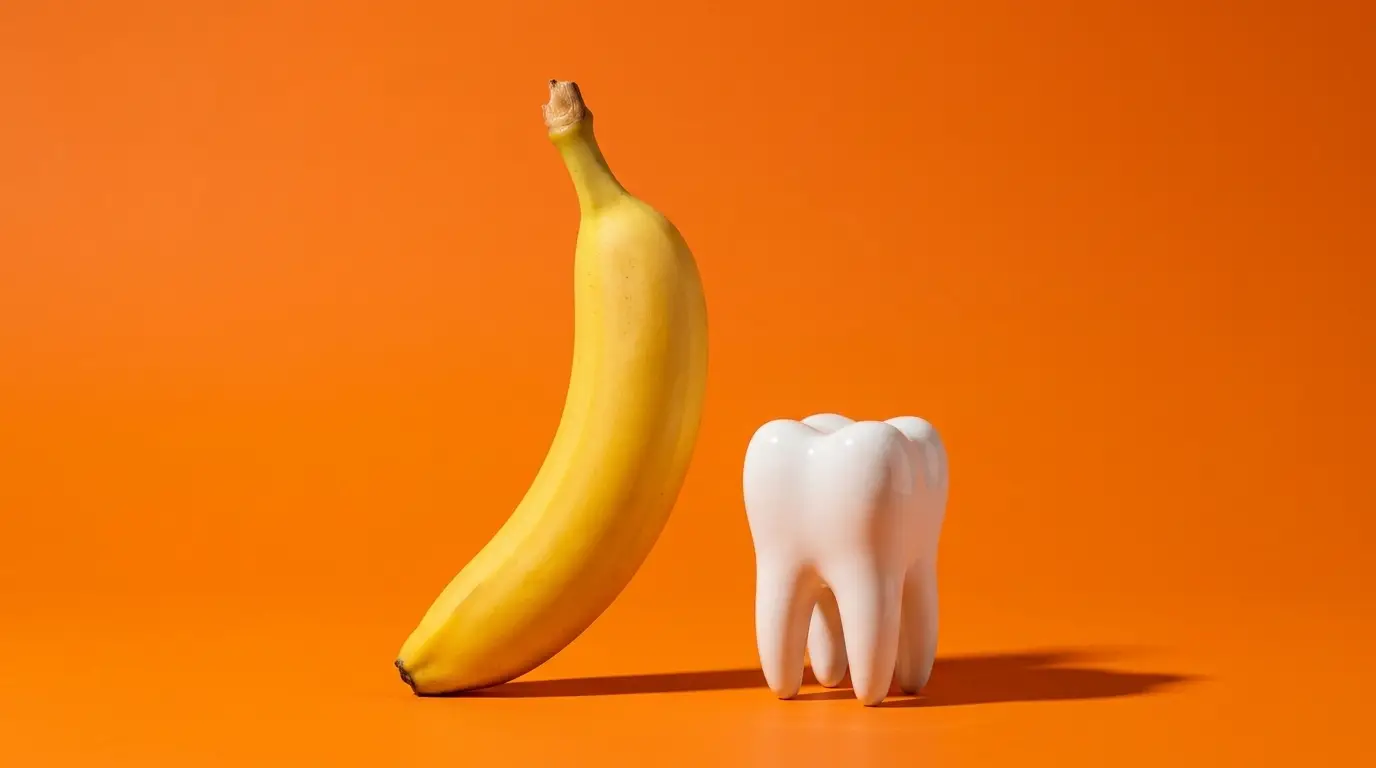
Yes, you can usually eat a banana after teeth whitening, even soon after your treatment. A banana is light in color, soft, and low in the dark pigments that cause stains, which makes it one of the safer foods to eat while your teeth are freshly whitened.
Here is the quick version:
- It is gentle. A banana is soft, so it puts little pressure on teeth that may feel sensitive.
- It is unlikely to stain. Its pale color is very different from coffee, tea, or berries, which are known to leave marks.
- Eat it at room temperature. A frozen or chilled banana can trigger a sharp zing in sensitive teeth.
- Watch what you add. Chocolate, dark berries, coffee, and caramel can cause staining, even if the banana itself is safe.
- Rinse afterward. A few sips of room-temperature water helps wash away leftover sugar.
Everyone’s teeth react differently, so if your dentist gave you specific instructions, follow those first. The sections below explain the timing, the acidity, and the safest way to eat your banana, step by step.
Why a Banana Is Considered a Whitening-Friendly Food
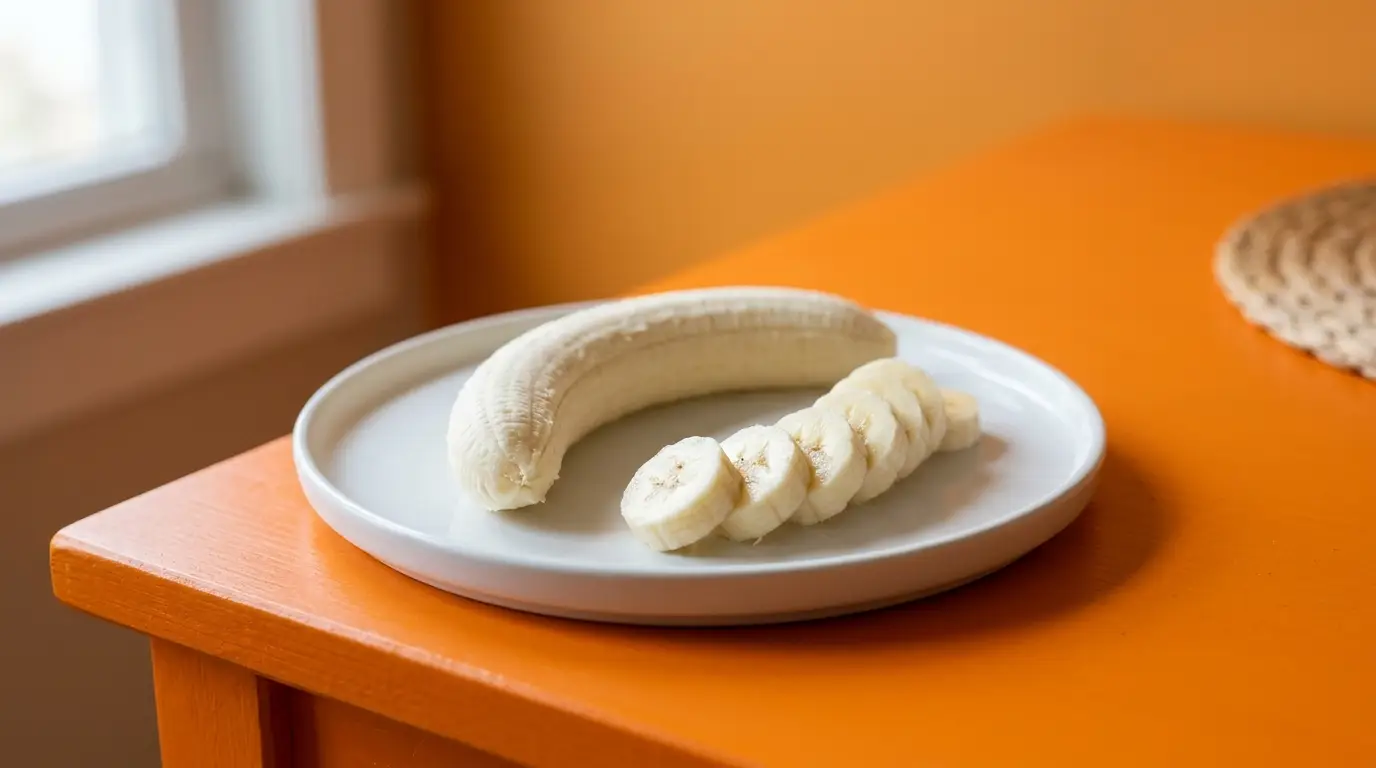
Right after whitening, your teeth can be more sensitive and more open to picking up color than usual. That is why dentists often point people toward light-colored, soft, gentle foods, and a banana fits that description well. Here is why.
It Has a Light Color
Stains come from strongly pigmented foods and drinks, such as coffee, tea, red wine, dark berries, and soy sauce. A banana is pale, so it is not a source of the dark pigments that cling to tooth surfaces. That makes it a low-risk choice while your teeth are freshly whitened.
It Is Soft and Easy to Chew
Whitening can leave your teeth feeling tender or sensitive for a few hours to a few days. A banana needs very little biting force, so you don’t have to press hard on sensitive teeth the way you would with an apple, raw carrot, or crusty bread. You can eat it in small, gentle bites without stress on your teeth.
It Is Generally Gentler Than Citrus Fruits
Highly acidic foods like oranges, lemons, grapefruit, and tomatoes can irritate sensitive teeth right after whitening. Bananas are generally considered milder than these, which is one reason they are a popular snack after treatment. We cover acidity in more detail in a later section.
It Is Simple and Convenient
A banana needs no cutting, cooking, or sauces, so there is little chance of adding something that stains. It also comes in its own peel, which keeps it clean, and it works as a quick snack when you want something light.
A Filling Choice When You Are Choosing Carefully
In the first day or two, many people feel unsure about what is safe to eat. A banana gives you real nutrition and a feeling of fullness without making you worry about dark colors or harsh textures.
A Quick Reminder
A banana on its own is a safe choice, but what you pair it with matters just as much. Chocolate, dark berries, coffee, and caramel can undo the benefit, and we cover those pairings later in the blog.
Is a Banana Acidic? Does It Affect Sensitive Teeth?
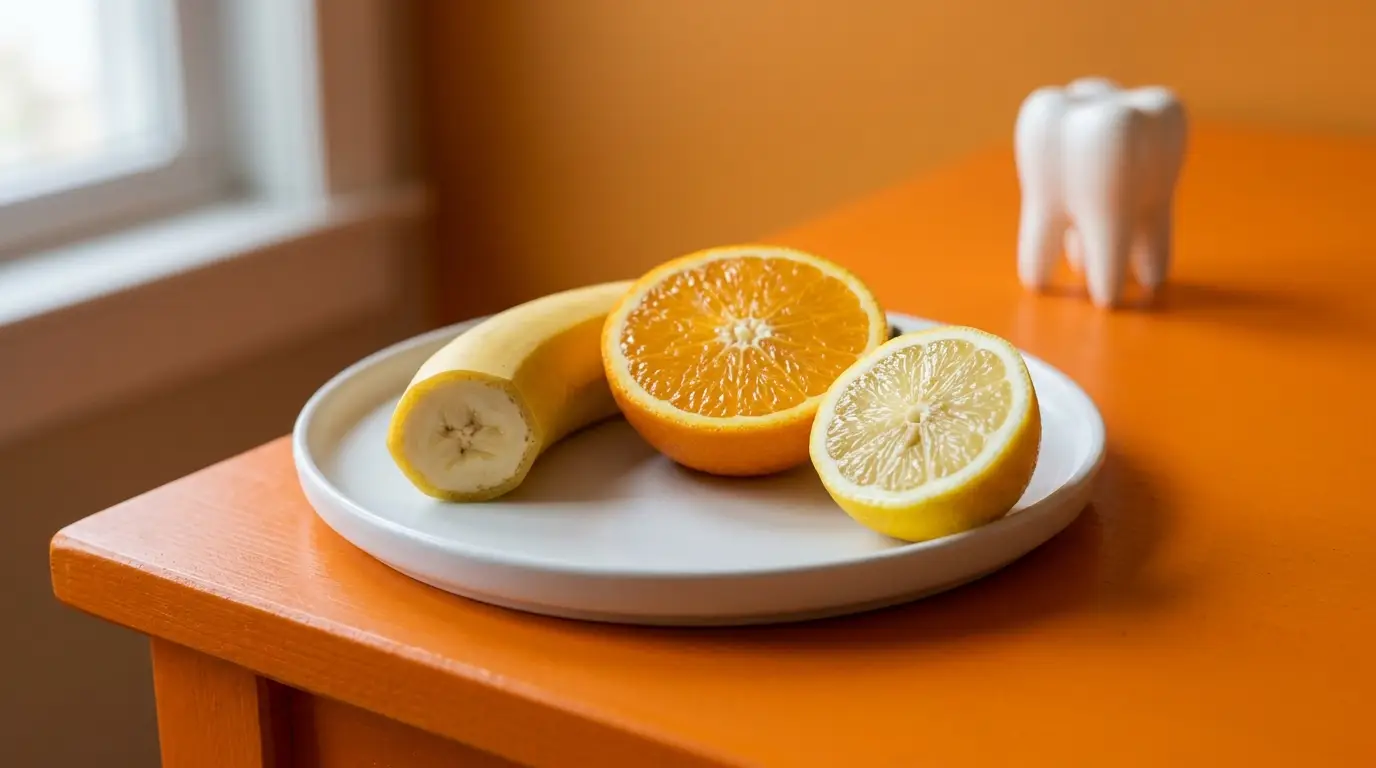
Acidity matters right after whitening, because freshly treated teeth can be more sensitive and more easily irritated. So it is fair to ask where a banana stands.
How Acidic Is a Banana?
A banana is mildly acidic, but it sits far below the harsh acids found in citrus fruits, tomatoes, and fruit juices. Oranges, lemons, and grapefruit are the real troublemakers, because they can trigger a sharp sting in sensitive teeth. A banana is generally a much gentler choice, which is why it is a common snack after whitening.
Why Acidity Matters Right After Whitening
Whitening can leave your teeth temporarily sensitive, and acidic foods can make that sensitivity feel worse. Acid can also soften enamel for a short time, which is why strongly acidic foods are best avoided in the first day or two.
Ripe vs. Unripe Bananas
- Ripe banana: soft, sweet, and a little less acidic. It is the better choice for sensitive teeth.
- Very green banana: firmer, more starchy, and harder to chew. It is best saved for later.
- Overripe banana with dark spots: safe for staining, but sweeter, so rinse with water afterward.
Does a Banana Cause Sensitivity?
For most people, no. Sensitivity after whitening usually comes from the whitening treatment itself, not from the banana. A banana only becomes a problem if it is very cold, since cold can trigger a zing in sensitive teeth. So eat it at room temperature, in small bites.
Quick Tips
- Choose a ripe, soft banana.
- Eat it at room temperature.
- Skip acidic pairings such as orange juice or citrus fruit salad.
- Rinse with room-temperature water afterward.
Can a Banana Stain Your Teeth After Whitening?
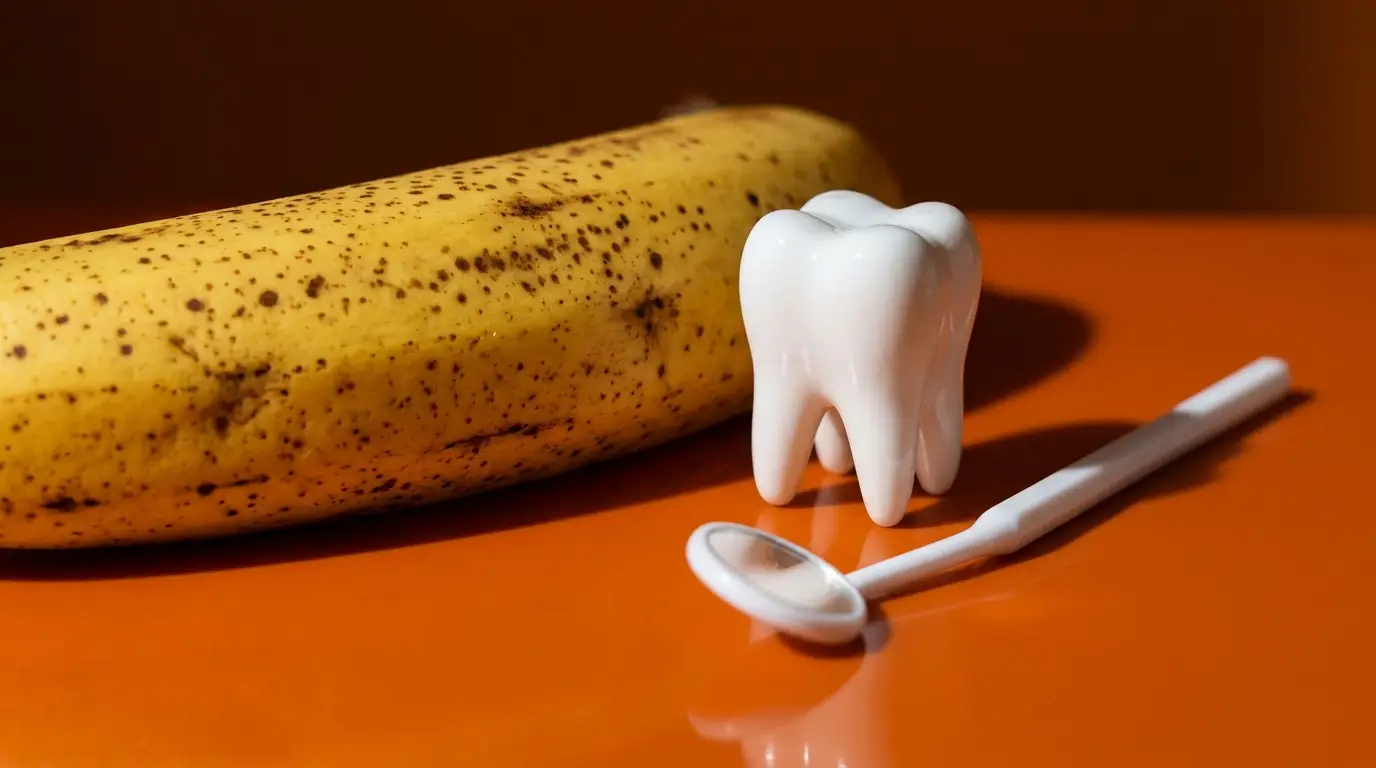
No, a banana is very unlikely to stain your teeth after whitening. Staining comes from strongly pigmented foods and drinks, and a banana is pale and low in the dark color compounds that cling to tooth surfaces.
Why a Banana Does Not Cause Stains
Freshly whitened teeth can pick up color more easily than usual, so the foods that matter most are the ones with deep pigments, like coffee, tea, red wine, dark berries, and soy sauce. A banana is nothing like these. Its light flesh does not leave color behind, which is why it is one of the safer snacks right after treatment.
What About Dark Spots on an Overripe Banana?
Those brown spots on the peel and flesh can look worrying, but they do not stain teeth. They are a sign that the banana is riper and sweeter, not that it contains staining pigment. The thing to watch with a very ripe banana is the extra sugar, so rinse with room-temperature water afterward.
The Peel and Your Teeth
Some people wonder whether the inside of the peel can help or harm whitening results. Rubbing a banana peel on your teeth is a popular home idea, but it is not a replacement for professional whitening, and you should not rely on it after your treatment. Simply eat the banana and leave the peel out of your routine.
Where the Real Staining Risk Comes From
The banana itself is rarely the problem. The risk usually comes from what is eaten with it, such as chocolate spread, dark berries in a smoothie, coffee on the side, or caramel drizzle. Those add-ins are covered in the next section.
Simple Rules to Keep Your Results Bright
- Eat plain, ripe bananas without dark toppings.
- Rinse with room-temperature water after eating.
- Wait about 30 minutes before brushing, then brush gently.
- Avoid pairing your banana with strongly colored foods or drinks.
Banana Add-Ins and Pairings: What Helps and What to Avoid
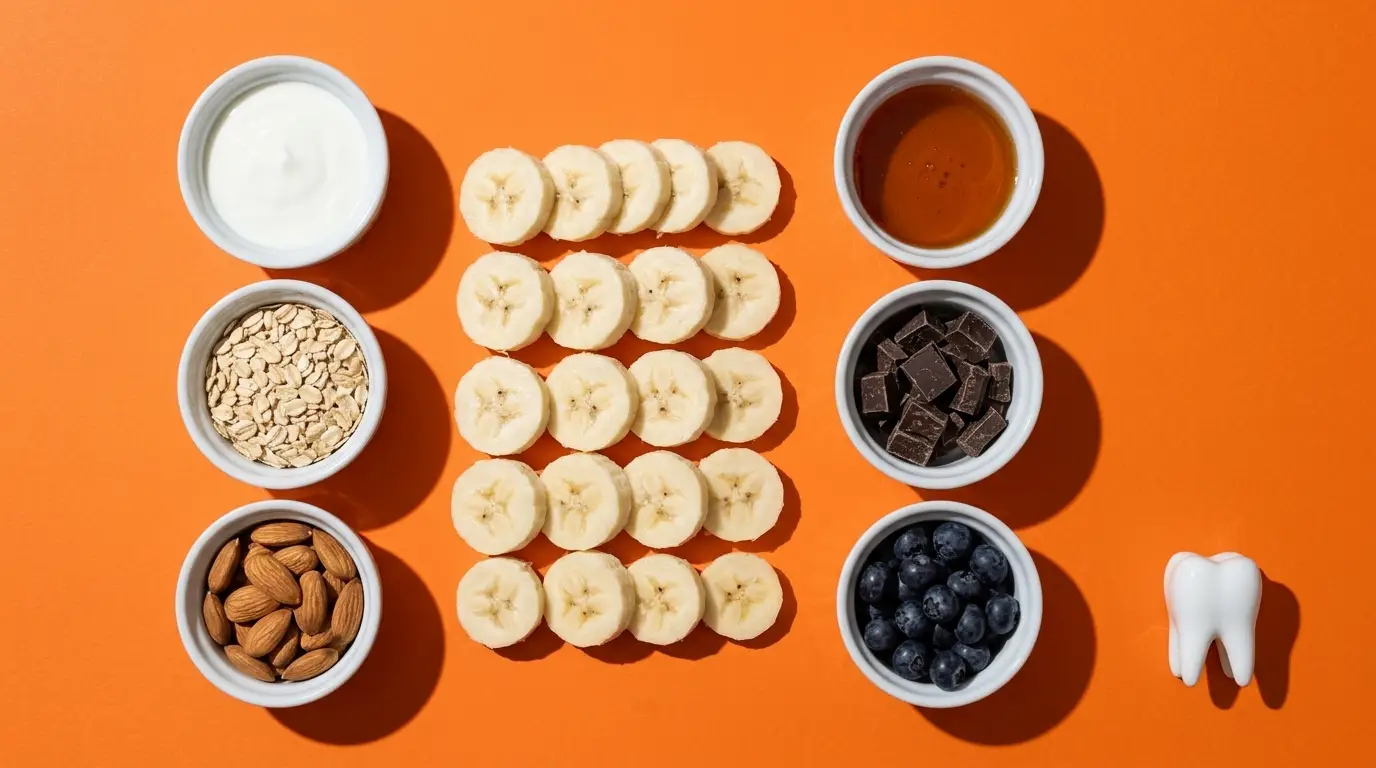
A banana on its own is a safe choice after whitening, but most people don’t eat it plain. What you pair it with can protect your results or quietly undo them. Here is a simple guide.
Safe Pairings
These are light in color, soft, and gentle on sensitive teeth:
- Plain or Greek yogurt: creamy, pale, and easy to eat.
- Oatmeal or plain oats: soft and filling, as long as you skip dark toppings.
- Milk: a light-colored drink that works well with a banana.
- Almond or cashew butter (light-colored): a smooth, pale spread in small amounts.
- Plain rice cereal or porridge: soft, light, and low in pigment.
Pairings to Avoid for the First 48 Hours
These can leave color on freshly whitened teeth:
- Chocolate and chocolate spread: the dark pigment can cling to tooth surfaces.
- Dark berries (blueberries, blackberries, cherries): strongly pigmented and likely to stain.
- Coffee and tea: among the most common causes of staining.
- Caramel or sticky drizzles: they cling to teeth and add sugar.
- Cinnamon and dark spices: they can leave a visible tint.
- Red or dark sauces and syrups: such as strawberry syrup or date syrup.
Banana Smoothies
Smoothies are popular, but they need care after whitening:
- Check the colors. A banana and milk smoothie is fine, but adding spinach, berries, cocoa, or dates can turn it into a staining drink.
- Watch the temperature. Ice-cold smoothies can trigger sensitivity, so let it sit for a few minutes.
- Consider a straw. It can help keep the drink away from your front teeth, but do not use strong suction if your teeth feel sore.
- Rinse afterward with room-temperature water.
Quick Guide
| Pairing | Safe? | Why |
| Plain yogurt | Yes | Light and soft |
| Plain oats | Yes | Gentle, low in pigment |
| Milk | Yes | Light-colored |
| Light nut butter | Yes, in small amounts | Pale and smooth |
| Chocolate or cocoa | No | Dark pigment |
| Dark berries | No | Strong staining pigment |
| Coffee or tea | No | Common stain source |
| Caramel | No | Sticky and sugary |
A Simple Rule
If the food or drink would stain a white shirt, skip it for the first 48 hours. After that, you can slowly add these items back in, rinsing with water afterward.
Temperature and Texture: How to Eat a Banana Comfortably
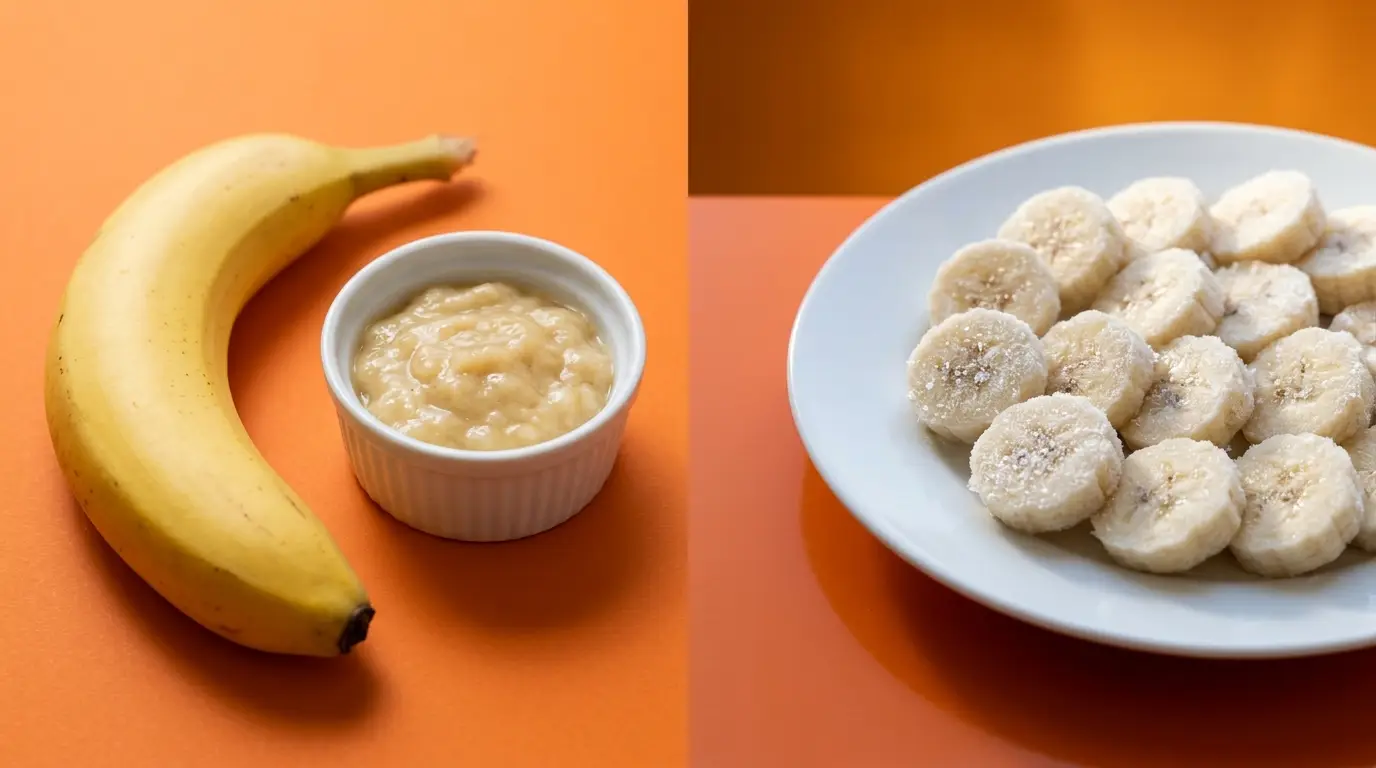
Even a safe food can feel uncomfortable if it’s eaten the wrong way. After whitening, your teeth may be more sensitive than usual, so how you eat the banana matters almost as much as the banana itself.
Room Temperature Is Best
Eat your banana at room temperature. Teeth that have just been whitened can react sharply to sudden changes in temperature, and a cold banana straight from the fridge can cause a quick, sharp zing.
- Chilled banana: let it sit out for 10 to 15 minutes before eating.
- Frozen banana: skip it for the first few days. It is both very cold and very firm, which is a hard combination for sensitive teeth.
- Warm or cooked banana: also best avoided for now, since heat can be uncomfortable on tender teeth.
Choose the Right Ripeness
A ripe, soft banana is the most comfortable option. Very green bananas are firmer and more starchy, so they need more chewing and more pressure on your teeth. Save those for later.
Slice It or Bite It Whole?
For the first day or two, slicing is the gentler choice.
- Sliced: you can place small pieces toward the back of your mouth and chew softly, with no need to bite down with your front teeth.
- Whole: biting straight into a banana uses your front teeth, which are often the most sensitive after whitening.
Chew Gently and Slowly
Take small bites and chew softly. A banana needs very little force, so there is no reason to rush. Avoid pressing hard on any tooth that feels tender.
Which Side of the Mouth Should You Use?
If one side feels more sensitive than the other, chew on the more comfortable side. If your whole mouth feels sensitive, use your back teeth and take small pieces.
Quick Comfort Tips
- Let a cold banana warm up before eating.
- Slice it into small pieces.
- Chew slowly with your back teeth.
- Rinse with room-temperature water afterward.
Step-by-Step: How to Eat a Banana Safely After Teeth Whitening
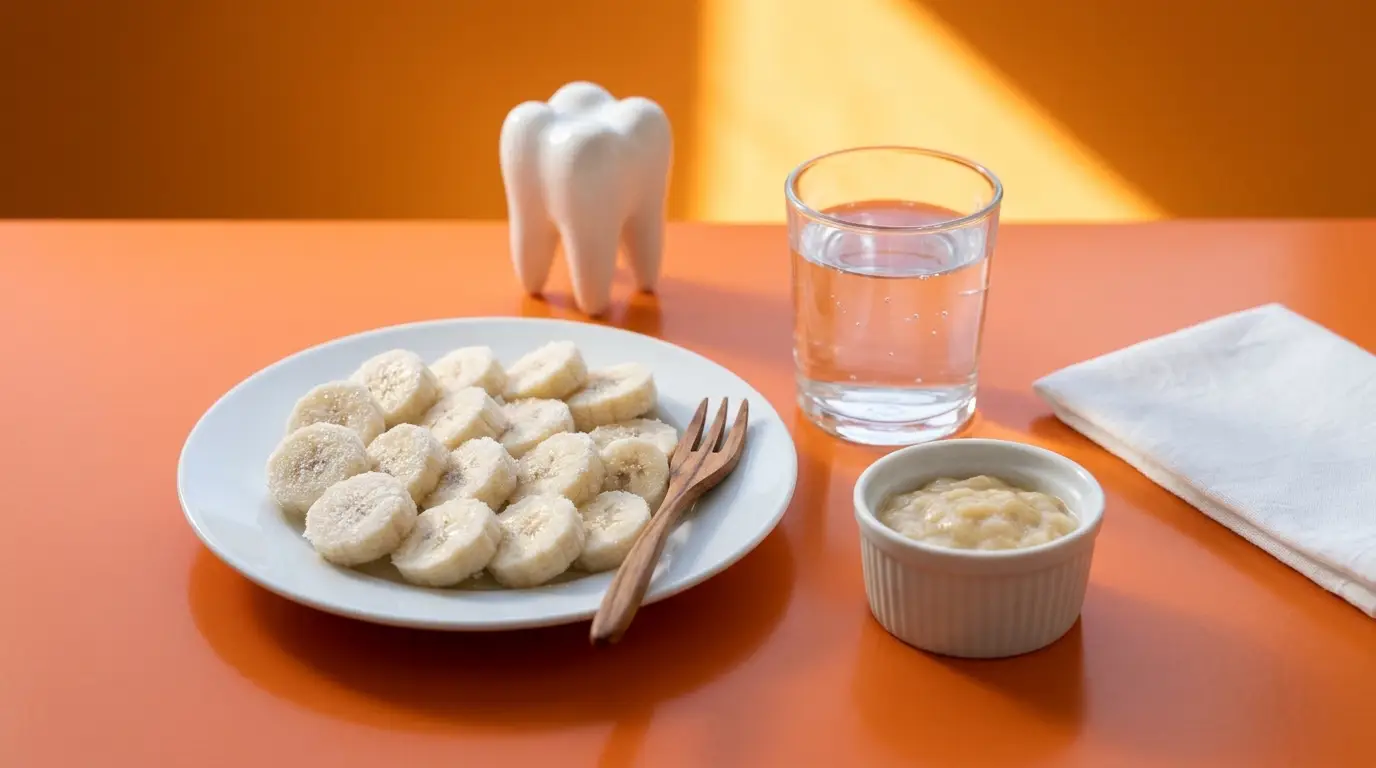
Follow these steps and you can enjoy your banana without putting your fresh results at risk.
Step 1: Check How Your Teeth Feel
Before you eat, gently run your tongue over your teeth and press lightly with a bite. If you feel strong sensitivity or soreness, give it a little more time and sip some room-temperature water first. If your teeth feel comfortable, you are ready.
Step 2: Choose the Right Banana
Pick a ripe but firm banana, yellow with no green tint. It should be soft enough to chew easily without needing much force.
Step 3: Bring It to Room Temperature
If your banana has been in the fridge, let it sit out for 10 to 15 minutes. A cold banana can trigger a sharp zing in sensitive teeth. Avoid frozen bananas completely for the first few days.
Step 4: Slice It Into Small Pieces
Cut the banana into bite-sized slices instead of biting into it whole. This keeps pressure off your front teeth, which are often the most sensitive after whitening.
Step 5: Skip Dark Toppings and Dips
Leave out chocolate, cocoa, dark berries, caramel, and cinnamon for the first 48 hours. If you want something extra, a spoonful of plain yogurt is a safe option.
Step 6: Chew Slowly With Your Back Teeth
Take small bites and chew gently on the more comfortable side of your mouth. A banana needs very little force, so there is no need to rush.
Step 7: Rinse With Room-Temperature Water
When you finish, swish a few sips of room-temperature water around your mouth before swallowing. This washes away leftover sugar and banana residue. Avoid very cold or very hot water, since sudden temperature changes can bother sensitive teeth.
Step 8: Wait Before Brushing
Do not brush right away. Wait about 30 minutes, then brush gently with a soft-bristled toothbrush.
Quick Checklist
- Teeth feel comfortable
- Ripe, soft banana
- Room temperature
- Sliced into small pieces
- No dark toppings or dips
- Chewed slowly with back teeth
- Rinsed with room-temperature water
- Brushed after 30 minutes
What If a Banana Causes Sensitivity or Discomfort?
A banana is a gentle food, but freshly whitened teeth can still react to almost anything. If you feel a twinge while eating one, it is usually a sign of temporary sensitivity from the whitening, not a problem with the banana itself.
Why It Can Happen
- Whitening sensitivity: the whitening gel can leave teeth temporarily more reactive, and this is a common, short-lived effect.
- Temperature: a cold or frozen banana can trigger a quick, sharp zing.
- Pressure: biting straight into a banana with your front teeth can feel sore if those teeth are tender.
- Sugar and acid: a very ripe banana, or one paired with acidic foods, can irritate sensitive teeth.
- Gum tenderness: if the gums are irritated, even soft food can feel uncomfortable.
What to Do Right Away
- Stop eating and take a break.
- Rinse gently with room-temperature water. Avoid very hot or very cold water.
- Wait a little before trying again, and let the banana warm up if it was cold.
- Slice it small and chew on the more comfortable side with your back teeth.
- Skip sugary and acidic extras until your teeth settle.
How Long Should You Pause Bananas?
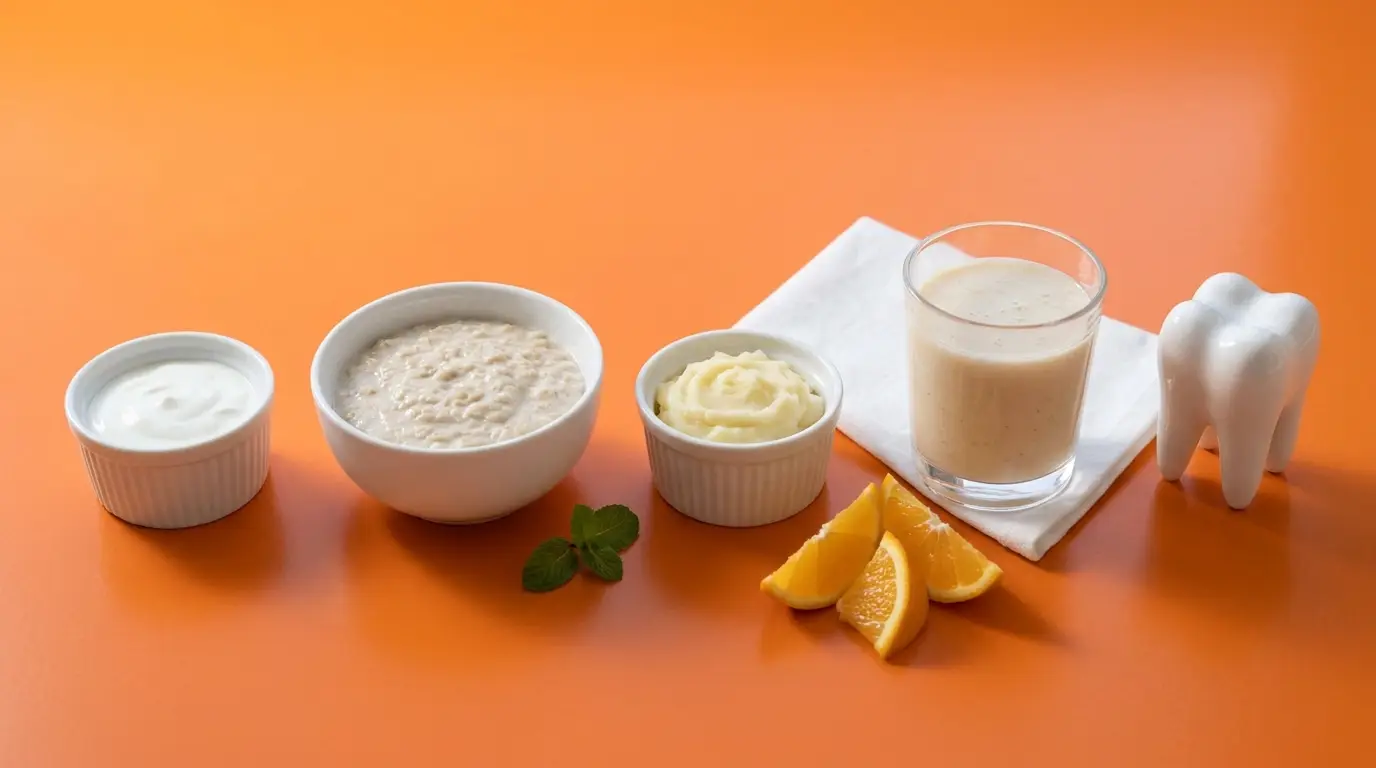
If the discomfort is mild, pause for a few hours or up to a day, then try again with a room-temperature banana in small pieces. In the meantime, soft, light-colored options like plain yogurt or oatmeal are gentler choices.
When to Tell Your Dentist
Contact us if:
- The sensitivity gets stronger each time you eat, even with a room-temperature banana.
- The pain lingers well after you finish eating instead of fading within seconds.
- Your gums look red, swollen, or feel sore.
- The discomfort is not improving after a few days.
Sensitivity that stays or gets worse should be checked, since we may be able to suggest a desensitizing treatment or product.
Banana Alternatives If Your Teeth Feel Too Sensitive
If a banana feels uncomfortable, or you simply want some variety, there are plenty of other gentle options. The best choices are soft, light in color, and served at room temperature.
Plain Yogurt
Creamy and pale, plain yogurt needs almost no chewing. Choose unflavored varieties, since fruit-flavored ones often contain dyes. Let it sit out for a few minutes if it is very cold.
Oatmeal or Porridge
Warm (not hot) oatmeal is soft and filling. Make it with milk or water, and skip dark toppings like cinnamon, chocolate, or berries.
Scrambled or Boiled Eggs
Eggs are soft, light in color, and a good source of protein. Let them cool to a comfortable temperature before eating.
Mashed Potatoes
Smooth and gentle on tender teeth, mashed potatoes are an easy option at room temperature or mildly warm. Skip heavy pepper or dark sauces.
Plain Rice
Soft white rice is a safe, neutral choice. Pair it with light-colored foods like steamed chicken or fish.
Soft White Bread or Plain Cottage Cheese
Both are gentle and pale. Choose soft bread without crusts or seeds, and plain cottage cheese without added flavors.
Other Soft Fruits
Pears (peeled), applesauce, and melon are light-colored and soft. Avoid citrus fruits and strongly pigmented fruits like berries and pomegranate.
Quick Comparison
| Food | Why It Works | Watch Out For |
| Plain yogurt | Soft, pale | Flavored versions with dye |
| Oatmeal | Soft, filling | Dark toppings |
| Eggs | Light, high in protein | Very hot temperature |
| Mashed potatoes | Gentle texture | Dark sauces or pepper |
| White rice | Neutral, soft | Dark sauces |
| Peeled pear or applesauce | Soft, mild | Added cinnamon or color |
Tips for Any Alternative
- Serve at room temperature or mildly warm.
- Take small bites and chew on the more comfortable side.
- Skip dark sauces, spices, and strongly colored drinks.
- Rinse with room-temperature water afterward.
Once your teeth feel comfortable again, usually within a few days, you can slowly return to your normal foods.
Frequently Asked Questions
Can I eat a banana right after teeth whitening?
Yes, in most cases. A banana is soft, light in color, and low in the pigments that cause stains. If your teeth feel comfortable and you have no specific instructions to wait, you can eat one soon after treatment. Eat it at room temperature, in small bites, and skip dark toppings.
How long after teeth whitening can I eat a banana?
Many people can eat a banana within a couple of hours, as long as their teeth are not too sensitive. The first 24 hours are when your teeth are most open to staining and sensitivity, so keep the banana plain and at room temperature. From day 3 onward, most people return to normal eating.
Does a banana stain teeth after whitening?
No, a banana is very unlikely to stain your teeth. Dark spots on an overripe banana do not leave color on your teeth. The real staining risk comes from what you eat with it, such as chocolate, dark berries, coffee, or caramel.
Can I eat a banana smoothie after teeth whitening?
Yes, if it is made with light-colored ingredients like banana and milk or plain yogurt. Avoid adding berries, cocoa, spinach, or dates, which can stain. Let the smoothie sit for a few minutes so it is not ice-cold, and rinse with room-temperature water afterward.
Is a frozen banana okay after teeth whitening?
It is best to skip frozen bananas for the first few days. They are very cold and very firm, which can trigger a sharp zing in sensitive teeth. A room-temperature banana is the safer choice.
Can I eat a banana with peanut butter or chocolate after whitening?
Chocolate is best avoided for the first 48 hours because its dark pigment can cling to freshly whitened teeth. Light-colored nut butters in small amounts are a safer choice. Dark or heavily roasted peanut butter, and chocolate spreads, are better saved for later.
Is a banana acidic for whitened teeth?
A banana is only mildly acidic and is much gentler than citrus fruits, tomatoes, and fruit juices. A ripe, soft banana is a good choice for sensitive teeth. Avoid pairing it with acidic items like orange juice.
Can banana peel whiten teeth?
Rubbing a banana peel on your teeth is a popular home idea, but it is not a replacement for professional whitening, and it should not be part of your routine after treatment. If you want longer-lasting results, speak with us about the right whitening options and aftercare for you.
Conclusion
So, can you eat a banana after teeth whitening? Yes, in most cases you can. It is soft, light in color, and gentler on sensitive teeth than many other foods, which makes it one of the safer snacks to reach for after your treatment.
To keep your results looking their best, eat your banana at room temperature, slice it into small pieces, and chew gently with your back teeth. Skip dark toppings and pairings like chocolate, dark berries, coffee, and caramel for the first 48 hours. Rinse with room-temperature water afterward, and wait about 30 minutes before brushing. If a banana causes any sensitivity, pause for a few hours or a day and try again, or choose a gentle alternative like plain yogurt or oatmeal.
For most people, sensitivity settles within a few days, and your normal eating habits return soon after. Every smile is different, though, so if your sensitivity gets stronger, lingers after you finish eating, or your gums look red or swollen, don’t wait it out. Contact us.
Have questions about your whitening aftercare or want a brighter smile? Book an appointment with our team today, and we’ll help you get the best results and enjoy them with confidence.