Your mouth feels tender, there’s a lingering metallic taste, and the bottle of Listerine on your bathroom shelf suddenly looks like the fastest fix. You’re not the only one thinking about it. Wisdom tooth removal is one of the most common procedures there is, and a UAE study of 2,000 dental X-rays found that 23.05% of Emirati patients had at least one impacted lower wisdom tooth.
But the first few days after extraction are when your mouth is most fragile. A blood clot is forming in the socket, and it protects the bone and nerves underneath. Alcohol-based mouthwash can sting raw tissue, and hard swishing can disturb that clot, which can lead to dry socket. Even alcohol-free versions have their own rules on timing and technique.
So the answer isn’t a simple yes or no. It depends on which Listerine you have, how many days it’s been since surgery, and how you rinse. In this guide, we’ll cover when it’s safe to start, which version to choose, how to use it gently, and what to do if you’ve already used it too early. Keep reading for the full breakdown below.
Can You Use Listerine After Wisdom Teeth Removal?
Not right away. The best practice is to avoid Listerine and every other mouthwash for the first 24 hours after wisdom teeth removal. Swishing and spitting should also be avoided during this time. A blood clot forms in the socket to protect the bone and nerves underneath, and the best way to protect it is to leave the area undisturbed.
After the first day, whether Listerine is safe depends on the type and on how well the mouth is healing. Regular alcohol-based Listerine is best avoided until the extraction site has healed enough to handle it. Alcohol-free versions can be introduced sooner, once the first 24 hours have passed and the area is no longer tender to the touch. In some cases, mouthwash is held back for a week or more, or replaced entirely by a prescription rinse.
The right timing varies because every extraction is different. The difficulty of the surgery, whether stitches were placed, and how the gums are healing all change when mouthwash becomes safe. The best practice is to treat the aftercare sheet from your own oral surgeon as the final word, since it is based on your specific procedure.
Why Listerine Can Be a Problem After Wisdom Teeth Extraction
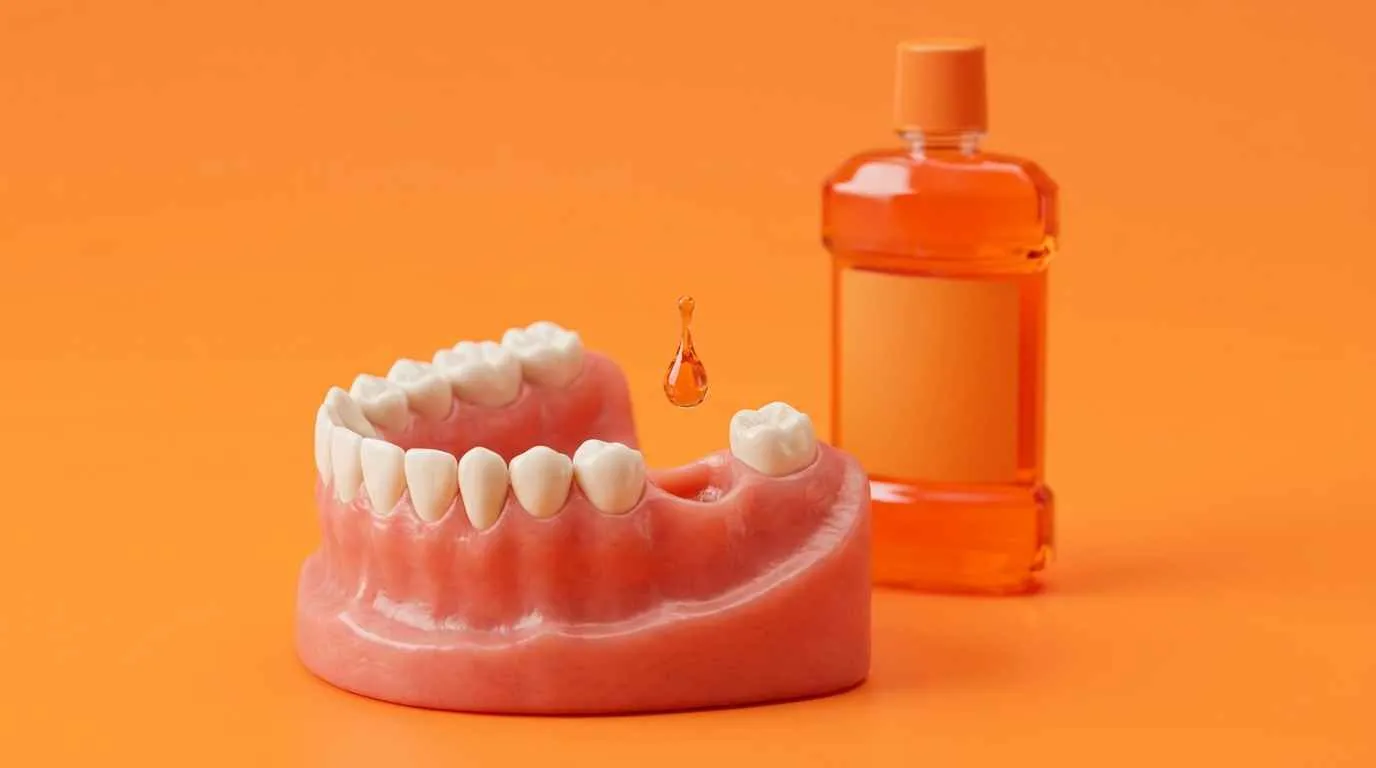
Listerine works well on healthy teeth and gums. A fresh extraction site is a different situation: an open wound that is still forming its protective layer. Three things about Listerine make it a poor fit for that stage.
Alcohol Content in Original Listerine Products
Many classic Listerine formulas, including Original and Cool Mint, contain a significant amount of alcohol. It acts as a solvent that carries the active ingredients and helps them reach the surfaces of the teeth. On intact gums that is harmless, but on a surgical wound it becomes a source of irritation.
How Alcohol Irritates a Fresh Extraction Site
Alcohol dries out soft tissue. The gum around a wisdom tooth socket is cut, sometimes stitched, and already inflamed. Exposing it to an alcohol-based rinse can make the tissue more irritated and more sensitive, which makes the early days of recovery less comfortable and can slow the settling of the area.
The Burning and Stinging Effect on Open Gum Tissue
The sting people feel when they rinse with Listerine on a normal day is much stronger on raw gum. After an extraction, that burning can run deep into the socket area and last well after the rinse is spat out. Pain that appears right after rinsing is a clear sign the mouthwash is too harsh for that stage of healing.
Vigorous Swishing Can Disturb the Blood Clot
The formula is not the only issue. Listerine is designed to be swished hard for 30 seconds, and that motion creates pressure and suction inside the mouth. The blood clot in the socket is still soft in the first days, and strong swishing can loosen or dislodge it. Once the clot is gone, the bone and nerve endings underneath lose their protection.
Listerine and Dry Socket: Is There a Link?
Yes. Early or aggressive mouthwash use is one of the habits connected to dry socket (alveolar osteitis), a painful condition that develops when the protective blood clot is lost from the extraction site. Wisdom teeth are already the extractions most prone to it. Dry socket occurs in roughly 1% to 5% of routine extractions, but the rate can climb as high as 30% for surgically extracted third molars. Repeated spitting and rinsing after extraction is among the patient-related factors that raise the risk.
Here is how an early Listerine rinse can lead there:
- The clot is still soft. In the first days it has not yet anchored to the walls of the socket.
- A hard swish creates pressure. Listerine is designed to be swished vigorously for about 30 seconds, which builds pressure and suction around the extraction site.
- A forceful spit adds suction. Spitting out the rinse pulls on the same area again.
- The clot loosens or is lost. This leaves the bone and nerve endings underneath without their natural cover.
- Air, food and fluids irritate the exposed bone. The result is pain that typically appears between the third and fifth day after surgery.
Repeat that routine two or three times a day and the odds of disturbing the clot climb quickly. The formula matters, but so does the timing: a rinse that is harmless once the gum has closed over the site can undo the first stage of healing if it is used too early.
How Long Should You Wait Before Using Listerine After Wisdom Teeth Extraction?

The wait depends on the Listerine type and on how far the extraction site has healed. These are typical ranges for a routine extraction:
| Time since surgery | Listerine okay? | What to know |
| First 24 hours | No | No mouthwash of any kind. Avoid swishing and spitting while the blood clot forms. |
| Days 2 to 3 | No | The clot is still fragile and the gum is swollen and tender. Alcohol-based and alcohol-free Listerine should both stay on the shelf. |
| Days 4 to 7 | Alcohol-free only, if the site is comfortable | An alcohol-free formula can be introduced once the area is no longer tender. Rinse gently and let the liquid fall out of the mouth instead of spitting. |
| After about 1 to 2 weeks | Regular Listerine, once the site has closed | The gum should have closed over the socket and stitches (if any) should have dissolved or been removed. |
Calendar days are only a guide. The site itself is a better measure, and it is ready for Listerine when all of these are true:
- There has been no bleeding for several days.
- The area is no longer painful or sore to the touch.
- The gum has started closing over the socket.
- Any stitches have dissolved or been removed.
Some situations push the timeline back. A surgical extraction that involved cutting into the gum or bone, a bone graft, or slower-than-usual healing all call for a longer wait. Smoking also delays recovery, so smokers should lean toward the later end of each range.
Which Listerine Products Are Safer After Wisdom Teeth Removal?

Not every Listerine is the same, and for a healing socket the main difference is what is in the formula. Alcohol-containing versions are the harshest, Zero Alcohol versions are gentler but still need correct timing, and whitening versions need a label check because of extra ingredients. Alcohol-free is the safer option, not a green light for day one.
- Alcohol-containing Listerine (Original, Cool Mint, Freshburst, Total Care Anticavity, Ultraclean): These formulas contain roughly 21% to 27% alcohol, which dries and stings raw gum tissue. They are best avoided until the gum has fully closed over the socket and the area is no longer tender.
- Zero Alcohol Listerine (Cool Mint Zero, Total Care Zero): These swap the alcohol for other ingredients and have a milder taste and feel, which makes them the safer choice for a healing mouth. They still stay out for the first 24 hours, and they should be introduced only once the site is no longer tender and used without hard swishing.
- Whitening Listerine (Healthy White, Advanced White and similar): Some whitening rinses contain hydrogen peroxide, and some also contain alcohol. Zero-alcohol whitening versions exist, but peroxide is a separate ingredient to check on the label. Skip all whitening rinses until the extraction site has fully healed.
Listerine Ingredients to Be Careful With After Surgery
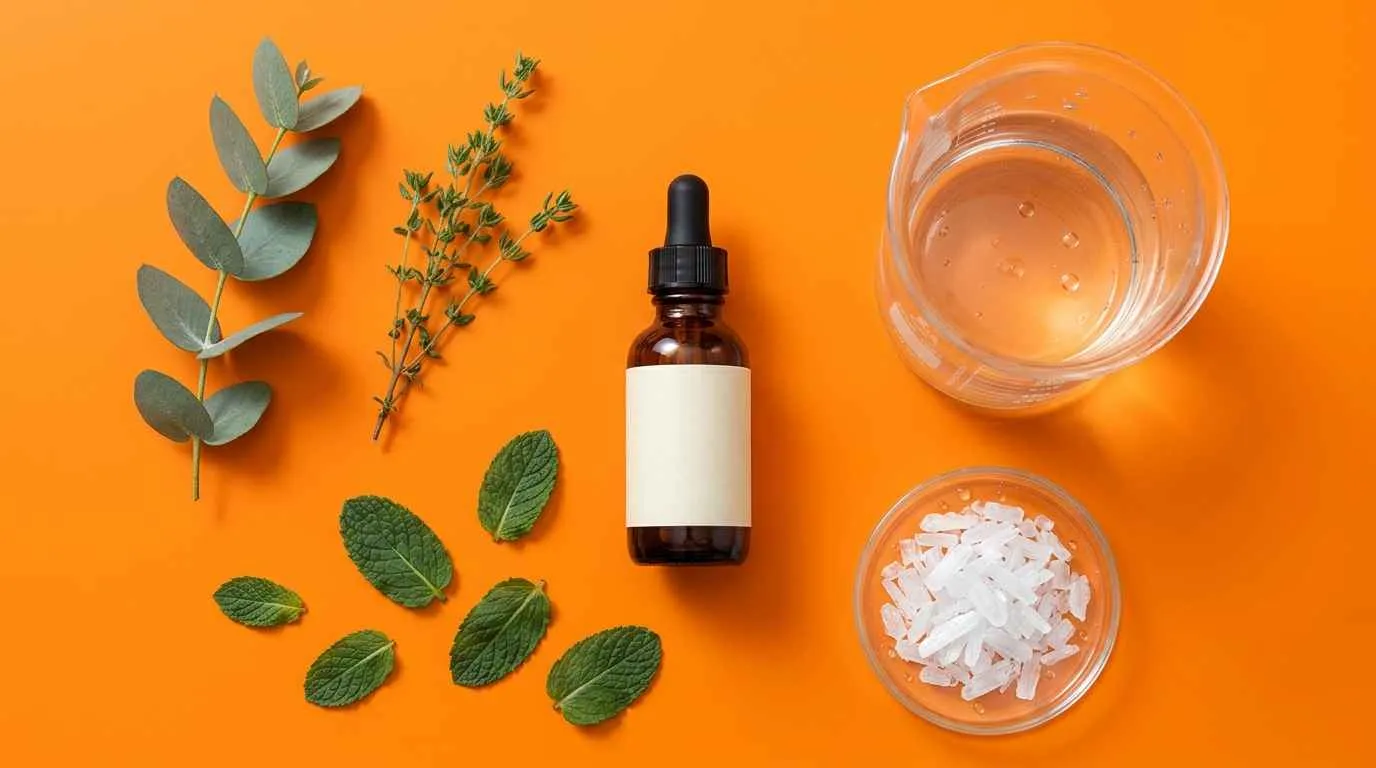
Alcohol gets most of the attention, but it is not the only ingredient that can irritate a healing socket. Menthol, essential oils, bleaching agents and foaming agents all act on tender gum tissue, and several of them are still present in alcohol-free versions. Knowing what each ingredient does makes it easier to judge a bottle by its label.
- Alcohol (ethanol): It dries out soft tissue and stings open gum. It appears in the inactive ingredients list as “alcohol,” usually followed by a percentage. Any formula that lists it is best avoided until the site has closed.
- Menthol: It creates the cooling, tingling feeling in the mouth. On healthy gums that feels fresh, but on a swollen, tender extraction site it can feel sharp and uncomfortable. It is listed in the actives or inactives, depending on the formula.
- Essential oils (eucalyptol, thymol, methyl salicylate): These are the active ingredients in classic Listerine Antiseptic, and they cause its intense taste and burn. Zero Alcohol versions often keep them, so removing the alcohol does not remove the sting.
- Hydrogen peroxide: It is the bleaching agent in many whitening rinses. It releases oxygen as it works, which is more activity than a fresh wound needs. Whitening formulas should wait until the gum has fully closed.
- Cetylpyridinium chloride (CPC): This antibacterial active is common in alcohol-free rinses. It usually causes less burning than alcohol, but it is still an antiseptic and not a healing aid, so it offers no advantage in the first days.
- Foaming agents (sodium lauryl sulfate, poloxamer): These help the rinse spread and foam in the mouth. In some people, sodium lauryl sulfate irritates sensitive tissue, which matters on a gum that is already inflamed.
- Strong flavoring and sweeteners: Intense mint and spearmint flavors add to the feeling of heat and burning in a sensitive mouth. “Mild” or “less intense” flavors are easier to tolerate while the site is still tender.
The safest label profile in the early days: no alcohol listed, no hydrogen peroxide, a mild flavor, and no “intense” or “whitening” in the name. If a rinse causes burning, bleeding or a spike in pain, stop using it and go back to plain water or salt water until the site is further along in healing.
How to Use Listerine Safely Once the Site Is Ready
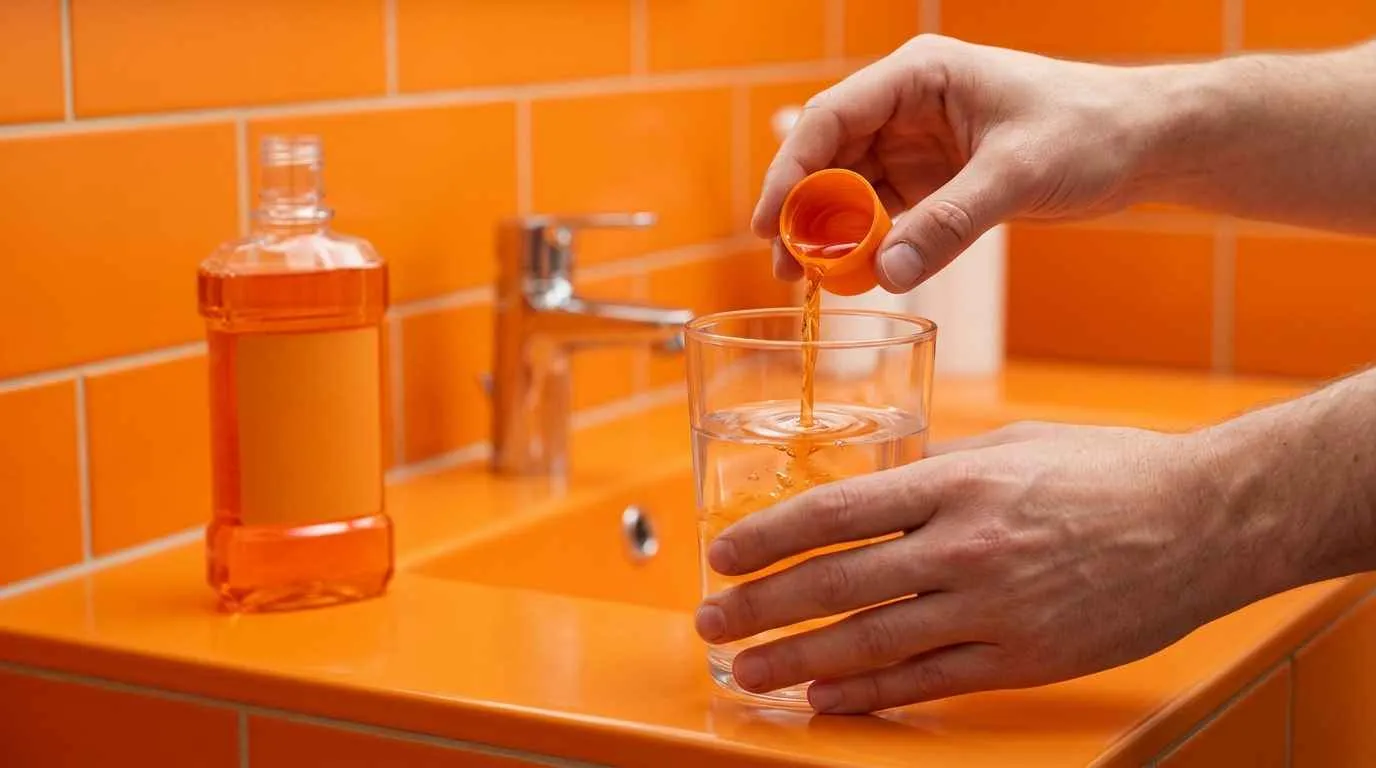
Once the extraction site has healed enough for mouthwash, technique matters as much as formula. The goal is to bathe the area in the rinse, not to push it around. A diluted, gentle rinse with no forceful spitting keeps the benefits of Listerine and removes most of the risk to the healing socket.
| Do | Don’t |
| Start only when there is no bleeding, no tenderness, the gum is closing over the socket and any stitches have dissolved or been removed | Start while the site is still bleeding, sore or open |
| Choose a Zero Alcohol formula in a mild flavor | Use alcohol-containing or intense-flavor formulas |
| Mix equal parts mouthwash and lukewarm water at first | Use it undiluted straight from the bottle |
| Use about half the usual measure | Use a full cap of mouthwash at the start |
| Move the liquid slowly around the mouth with soft cheek movements | Swish vigorously, which creates pressure and suction around the socket |
| Lean over the sink, open your mouth and let the liquid fall out | Spit forcefully, which pulls on the extraction site |
| Keep each rinse to 10 to 15 seconds, then build toward the time on the label | Rinse for the full 30 seconds from day one |
| Begin with one rinse a day, ideally after brushing, and move to twice a day once the site is comfortable | Rinse after every meal or several times a day at first |
| Rinse the front and sides of the mouth gently | Gargle, which pushes liquid toward the back of the mouth where wisdom tooth sockets are |
| Use lukewarm liquid | Use hot or very cold liquid, which can aggravate sensitive tissue |
| Let the rinse fall out completely | Swallow the rinse |
A safe rinse in one sentence: diluted, lukewarm, a short and gentle swirl, then let it fall out of the mouth.
Signs Listerine Is Irritating Your Extraction Site

Mild tingling is normal with any mouthwash, but a healing socket should feel the same or better after a rinse, never worse. The signs below show up during or shortly after rinsing and point to a formula, timing or technique that is too much for the site right now.
Burning that doesn’t settle. A brief sting that fades within seconds can be a strong flavor. Burning that lingers for minutes, or that returns every time you rinse, shows the formula is too harsh for the tissue.
Pain or sensitivity that increases after rinsing. A socket that aches more after a rinse than it did before is reacting to the rinse. Pain that builds each time the mouthwash is used is a clear sign to stop.
Bleeding after rinsing. Pink or red streaks in the rinse several days after surgery show that the clot or the healing gum has been disturbed, usually by a formula that is too strong or by too much swishing and spitting.
Redness or swelling around the socket. Gum that looks more inflamed, puffy or raw than it did before the rinse means the tissue is irritated, not healing.
A dry, tight or raw feeling in the gums and cheeks. Alcohol and strong essential oils can dry out the soft tissue around the extraction site, leaving it tight and uncomfortable even when the socket itself seems fine.
The rule: if any of these signs appear, stop using Listerine right away and go back to plain water or salt water until the area is calm again.
What to Do If You Already Used Listerine Too Early

Stop using it, leave the socket alone, and watch the site for the next few days. One early rinse is a common mistake and rarely causes lasting harm.
Phase 1: Right now
Let any liquid left in your mouth fall out without spitting hard. Skip rinsing with plain water to “wash it out,” since extra swishing adds more pressure on the clot. Sip cool water, keep your head upright, and avoid touching the socket with your tongue or fingers. If the site is bleeding, press clean, damp gauze on the area for 15 to 20 minutes and avoid spitting.
Phase 2: The rest of the day
Avoid straws, hot drinks and any further rinsing. If you used an alcohol-containing or whitening formula, or you swished hard and spat forcefully, take extra care to keep the area undisturbed so any disturbed clot has the best chance to settle. A single gentle rinse with no pain, burning or bleeding afterward can be treated as a minor slip.
Phase 3: The next 3 to 5 days
Return to normal aftercare and watch the site. Pain that builds instead of easing, especially around the third to fifth day, bleeding that returns, or a bad taste or smell from the socket are the changes to take seriously.
Listerine vs. Other Rinses After Wisdom Teeth Removal
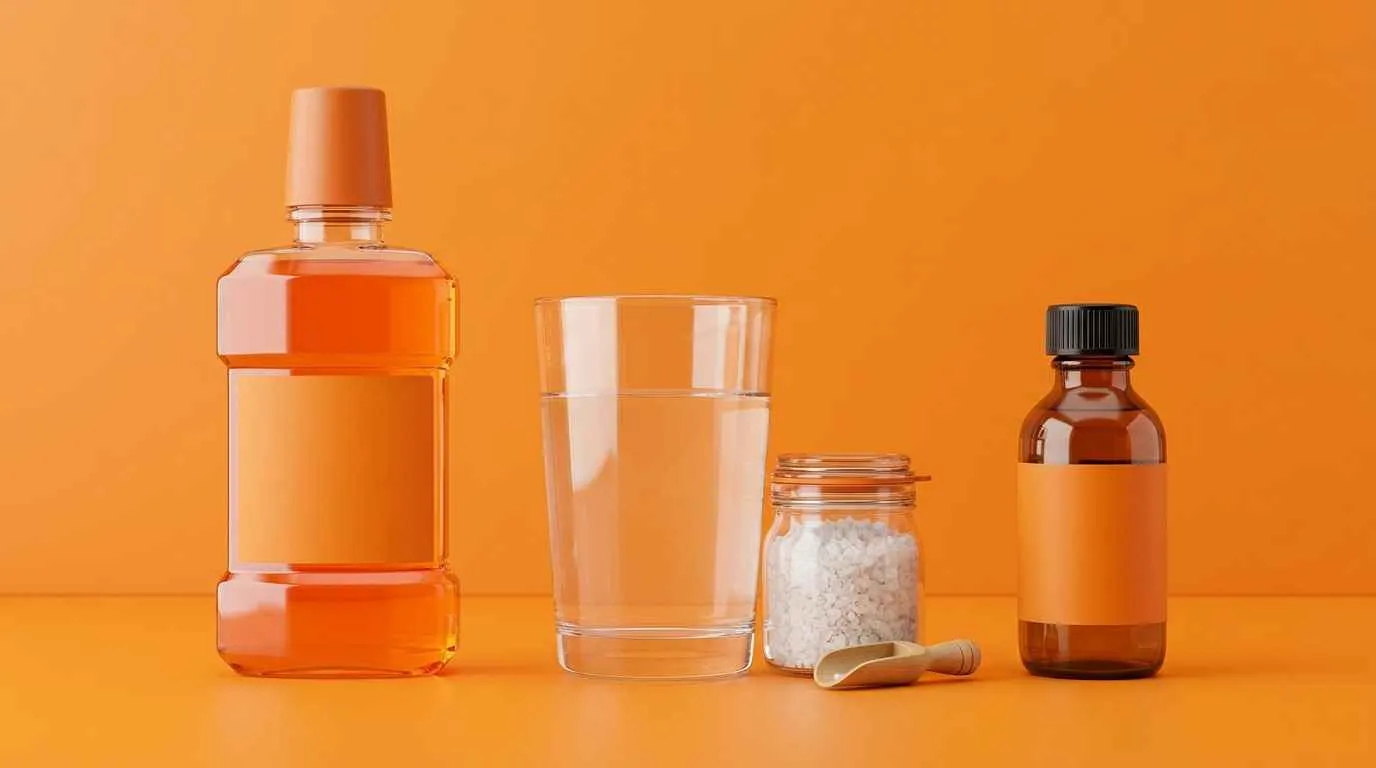
Listerine is a daily-use antiseptic, not a wound-care rinse, so other options often suit the early days better. Here is how it compares head to head with the three most common alternatives.
Listerine vs. salt water
Verdict: salt water wins in the early days.
Salt water is gentle, has no alcohol, no menthol and no strong flavor, and it cleans the area without stinging. It is the standard rinse once the first 24 hours have passed. Listerine only catches up once the site has healed and the gum has closed.
Listerine vs. chlorhexidine (prescription rinse)
Verdict: chlorhexidine wins when it has been prescribed.
Chlorhexidine is a medicated antibacterial rinse that dentists prescribe for a set period after more complex extractions. It is designed for this situation, while Listerine is not. Used for too long, chlorhexidine can stain teeth and change taste, which is why it is a short-term rinse and why Listerine takes over later.
Listerine vs. alcohol-free, non-medicated rinses
Verdict: a close call, with a slight edge to the plain rinse early on.
A mild alcohol-free rinse without strong menthol or essential oils is easier on tender gum than any Listerine. Alcohol-free Listerine closes the gap once the site is comfortable, and it gives stronger plaque and germ control for everyday use.
Best choice by stage: no rinsing for the first 24 hours, then salt water (or a prescribed rinse) while the site heals, then alcohol-free Listerine once the area is comfortable, and regular Listerine only after the gum has fully closed.
Common Mistakes People Make With Listerine After Extraction

Most Listerine problems after wisdom tooth removal come from a handful of understandable assumptions. Here is what each one gets wrong, and the better move.
- Using it on day one because of the bad taste: The first 24 hours are when the clot is most fragile, and any mouthwash can disturb it. A bad taste is normal and fades as the site settles. Wait out the first day with nothing, then use salt water for the taste.
- Swishing hard to kill more bacteria: Harder swishing does not clean the socket better. It builds pressure and suction around a clot that has not anchored yet. Rinse gently and let the liquid fall out of the mouth.
- Assuming Zero Alcohol means zero risk: Alcohol-free removes one irritant, but menthol, essential oils and flavoring remain, and the swishing risk is unchanged. Treat Zero Alcohol as the safer option, still introduced only once the site is no longer tender.
- Using it to treat pain or a suspected dry socket: Listerine does not treat pain or dry socket, and strong rinsing can make an exposed socket worse. Pain that grows after the first few days needs a dental check, not a stronger rinse.
- Using it instead of the rinse the surgeon gave you: A prescribed rinse is chosen for a specific procedure and period, while Listerine is a daily-use product and not a substitute. Finish the prescribed rinse as directed, and switch to Listerine only when the site is healed and your dentist agrees.
Nearly every one of these mistakes comes down to timing and pressure. Waiting until the site is ready, choosing the mildest formula and rinsing gently avoids almost all of them.
When to Call Your Dentist or Oral Surgeon

Some irritation after a rinse settles on its own, but certain signs mean the site needs a professional look. Here is how to tell how urgent each one is.
Seek urgent care right away
- Difficulty breathing or swallowing
- Swelling that spreads to the throat, neck or around the eye
- A high fever together with spreading facial swelling
- Heavy bleeding that doesn’t stop after 20 to 30 minutes of firm pressure with gauze
Call the same day
- Pain that gets worse after using mouthwash, or that builds around the third to fifth day instead of easing
- A socket that looks empty or shows pale bone instead of a dark clot
- Pus, or a bad taste or smell from the socket that stays after rinsing
- Swelling, redness or heat in the cheek or gum that increases after day three
- Fever with a sore, swollen jaw
- Bleeding that returns after it had stopped
Mention at your next check-up or when you call
- Mild burning that fades after a rinse but returns each time
- A dry or raw feeling in the gums after using Listerine
- Doubts about which mouthwash is right for your stage of healing, including which Listerine formula to choose
- Stitches that haven’t dissolved when expected, or that feel irritated after rinsing
When in doubt, call. A short phone call or a quick check is easier than treating a complication that has had days to develop.
Frequently Asked Questions
Can I use Listerine the same day as wisdom teeth removal?
No. The first 24 hours are when the blood clot is most fragile, so skip every kind of mouthwash, including Listerine, and avoid swishing and spitting.
Can I use Listerine Zero 24 hours after surgery?
Not yet in most cases. A Zero Alcohol formula is the safer option, but days 2 and 3 are still too early. It can be introduced around days 4 to 7, once the site is no longer tender, and it should be diluted and used gently.
Can I use Listerine if I have stitches?
Not the regular formula. While stitches are in place, stick to salt water or a prescribed rinse. An alcohol-free, diluted version may be possible later if the site is comfortable, and regular Listerine can wait until the stitches have dissolved or been removed and the gum has closed.
Can I use Listerine for bad breath after wisdom teeth removal?
Bad breath is common in the first days because of the healing site and trapped food particles. Listerine is not the first fix. Gentle salt water rinses and careful brushing of the other teeth work better, and a Zero Alcohol formula can be added later. A foul smell that stays or gets stronger is worth a dental check.
Can I gargle Listerine for a sore throat after surgery?
No. Gargling pushes liquid toward the back of the mouth, where the wisdom tooth sockets are, and Listerine can dry and sting the throat. Warm (not hot) fluids are a safer way to soothe it, and a sore throat that lasts more than a few days should be checked.
Can I use Listerine to treat or prevent dry socket?
No. Listerine does not treat dry socket, and it does not prevent it. The best prevention is protecting the blood clot, which means no early rinsing, no forceful spitting and no straws. Pain that builds a few days after surgery needs a dental check.
Can I use Listerine on one side of my mouth only?
This is hard to control. Liquid moves around the whole mouth, and tilting the head does not reliably keep it away from the socket. Wait until the whole mouth is ready for a gentle rinse.
Does Listerine help with the bad taste after extraction?
It can cover the taste, but it is not the safest way to do it early on. The taste fades as the site settles, and salt water rinses after the first day freshen the mouth without the sting of mint or alcohol.
Conclusion
Listerine can have a place in your recovery, but only at the right time and in the right form. The first 24 hours call for no mouthwash at all. After that, an alcohol-free, mild formula comes before any regular Listerine, and whitening or intense formulas wait until the site has fully closed.
The points to take with you:
- Skip all mouthwash for the first 24 hours, and avoid swishing and spitting.
- Choose a Zero Alcohol, mild-flavor formula first, and only once the site is no longer tender.
- Dilute it, rinse gently for a short time, and let it fall out of the mouth.
- Stop at the first sign of burning, bleeding, increasing pain or swelling.
- Let the aftercare plan from your own oral surgeon decide the exact timing.
Not sure whether your mouth is ready for Listerine? Book a follow-up visit or call your dentist. A quick check of the extraction site gives a clear answer on when to start and which mouthwash to use.