Wondering if peanut butter is safe after teeth whitening? Learn which type is best, what to pair it with, and how to protect your results. Read the dentist’s advice.
You just finished your teeth whitening, your smile looks brighter than ever, and now you’re hungry. You open the kitchen cupboard and there it is: a jar of peanut butter. It’s quick, filling, and everyone has it at home. But is it okay to eat right now?
It’s a fair question to ask. After whitening, your teeth are not quite back to normal yet. A review of whitening research found that about 60% of patients report tooth sensitivity after in-office whitening. That means even a simple snack can feel uncomfortable, and many people also worry that the wrong food could spoil their fresh results.
So what about peanut butter? The short answer is that plain peanut butter is usually fine after teeth whitening. It’s light in colour, it isn’t acidic, and it’s soft enough for sensitive teeth. But the type you choose and what you eat it with can make a real difference. In this post, our dental team explains which peanut butter is safest, what to pair it with, and what to avoid.
Does Peanut Butter Stain Teeth?
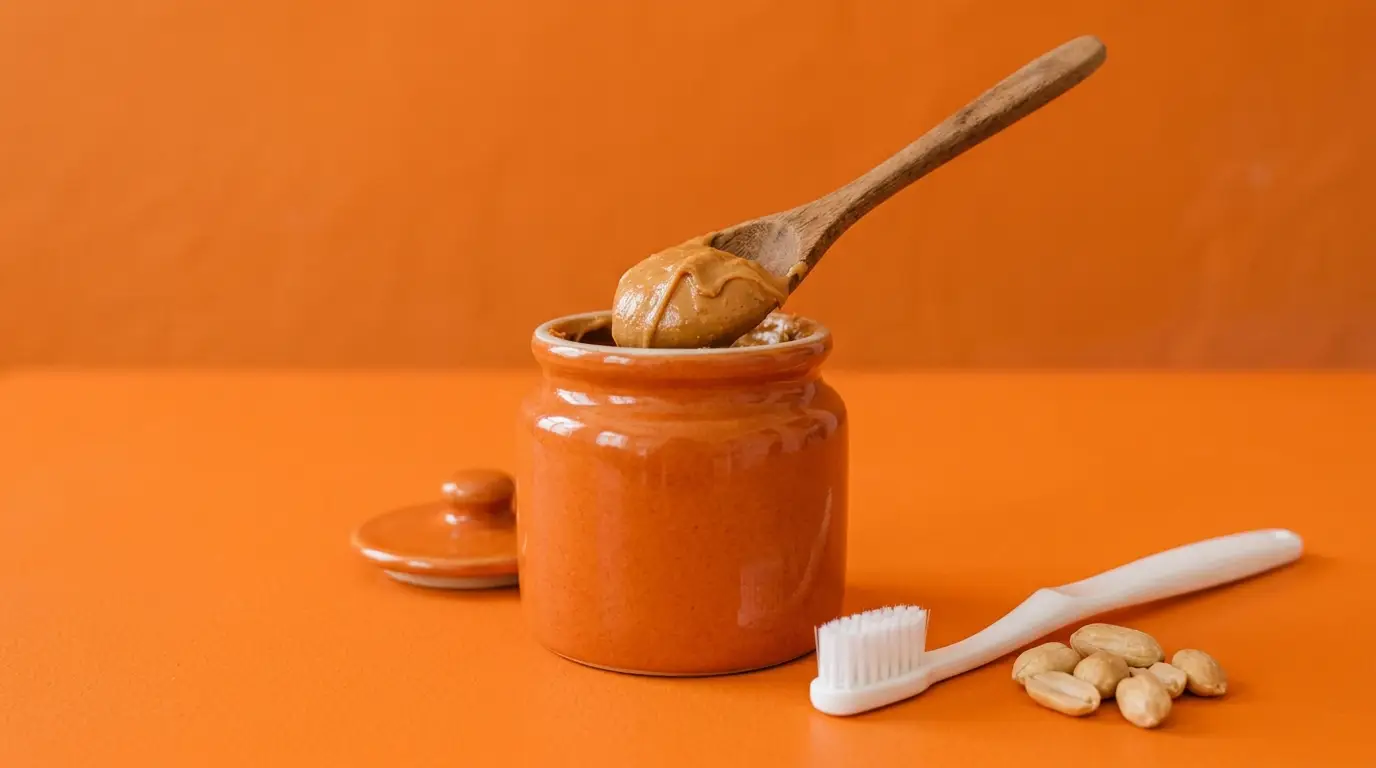
Plain peanut butter does not stain teeth, but chocolate, flavoured, or artificially coloured peanut butter can. So it depends on which type you eat.
Teeth usually pick up stains from foods and drinks with strong, dark colours, like coffee, red wine, berries, and dark sauces. Plain peanut butter doesn’t belong in that group. Its colour is a light, creamy brown, and it doesn’t carry the heavy pigments that stick to enamel.
Flavoured types are different. Chocolate peanut butter and spreads with berry or jelly swirls contain dark colours that can leave marks on freshly whitened teeth. Some brands also add artificial colours, so a jar that looks harmless can still be a problem.
Acid is the other thing dentists watch for. Acidic foods like citrus, vinegar, and fizzy drinks can irritate teeth that are already sensitive after whitening. Plain peanut butter is not acidic, so it won’t cause that problem.
There’s one more catch. Peanut butter is thick and sticky, so it can cling to your teeth for longer than lighter foods. Leftover food can hold onto other colours and build up plaque, so a quick rinse with water afterwards helps.
The bottom line: plain peanut butter is a low-risk food for whitened teeth, but not every jar is. Next, we look at which types are safe and which to avoid.
Which Peanut Butter Is Safe After Teeth Whitening?

The safest choice is plain, creamy, unsweetened peanut butter. Crunchy needs care, and chocolate or flavoured types should be avoided.
Creamy peanut butter is soft and smooth, so it’s gentle on teeth and gums that feel sensitive after whitening. It also doesn’t leave hard pieces stuck between your teeth, which makes it the easiest option in the first few days.
Natural peanut butter is just as good. The best jars list only peanuts and a little salt. With no added colours or sugar, there’s nothing in them that can harm your results.
Crunchy peanut butter needs a little care. The nut pieces can press on sensitive teeth and irritate your gums. If your teeth feel sore, wait a day or two before you try it. Once the sensitivity is gone, it’s fine to eat.
Sugary peanut butter is better avoided. Some brands add a lot of sugar, and sugar sticks to your teeth and feeds plaque. That’s not what you want when you’re trying to protect fresh results.
Chocolate and flavoured peanut butter are the ones to skip. The dark colours in chocolate, berry, or jelly-swirl varieties can leave marks on newly whitened teeth.
When you’re choosing a jar, read the ingredients list. A short list is better, and “peanuts, salt” is ideal. Skip anything with artificial colours or added flavours. If the oil has separated on top, that’s normal for natural peanut butter, so just stir it back in.
Does Peanut Butter Stick to Teeth After Whitening?
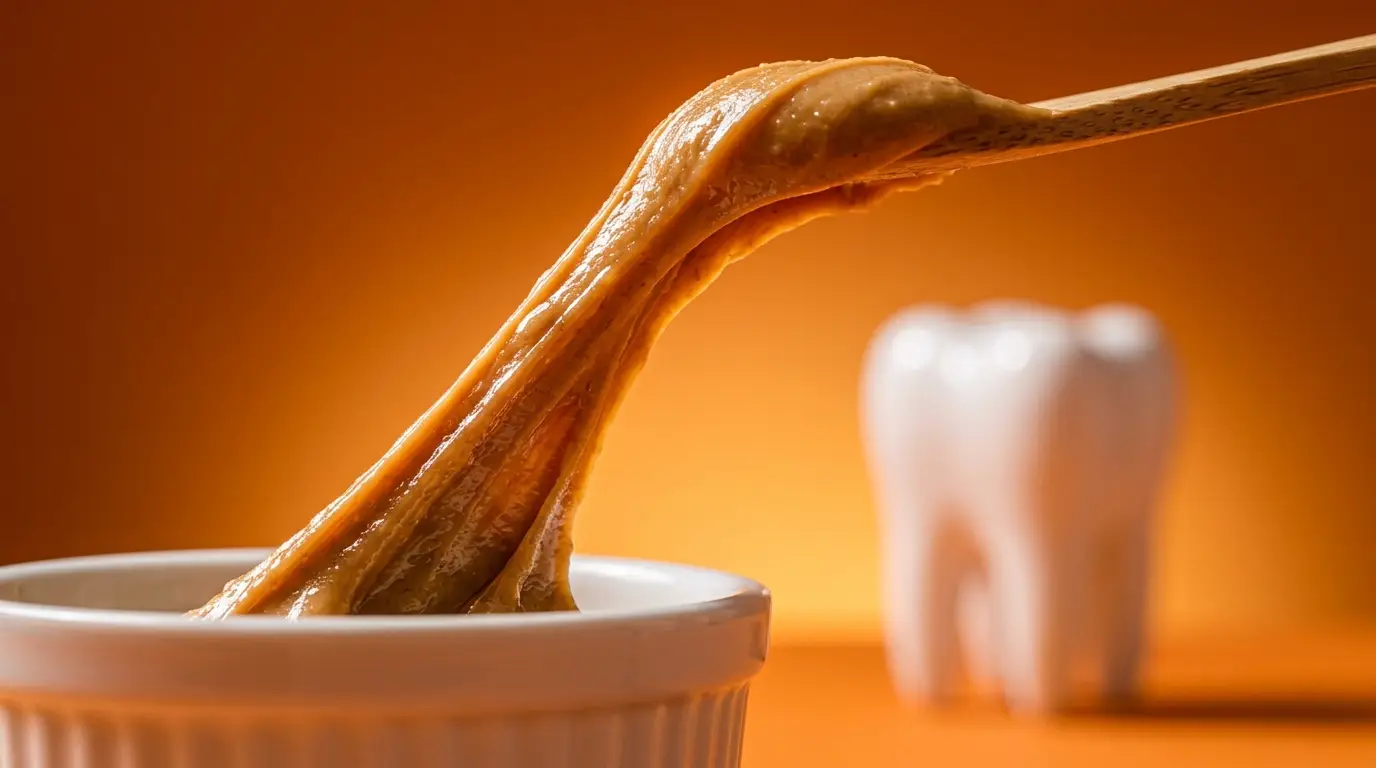
Yes, peanut butter is sticky and can cling to your teeth, but a quick rinse with water and gentle brushing remove it easily.
Why Peanut Butter Sticks
Peanut butter is thick, oily, and dense. It spreads into the grooves on your back teeth and the small gaps between teeth, and it can stay there longer than most foods.
Why It Matters After Whitening
Peanut butter itself doesn’t stain your teeth. The problem is what stays behind. Leftover food feeds plaque, and it can also hold onto colour from other things you eat or drink, like tea or sauces. Since your teeth are more sensitive after whitening, you want them clean and free of anything that sits on them for hours.
What to Do After Eating It
Rinse your mouth with plain water right after you finish. Swish for 20 to 30 seconds so the water reaches between your teeth. This clears most of the sticky layer.
Then brush gently with a soft toothbrush and a fluoride or desensitizing toothpaste. Don’t scrub hard, because your teeth and gums may be tender. If you normally floss, do it that day as well, since peanut butter loves to hide between teeth.
Tips to Keep It from Sticking
Spread a thin layer instead of eating it by the spoonful. Pair it with soft white foods like plain bread or a banana, which also help carry some of it off your teeth. Keep a bottle of water nearby and sip it as you eat.
Peanut Butter and Teeth Whitening: Common Myths
Some common beliefs about eating after whitening are not backed up by research, though a few simple precautions still make sense.
- Myth: You Can Only Eat White Foods After Whitening: A 2024 review of studies found that colour-free diets made no significant difference to tooth colour one month after treatment. Many clinics still recommend light-coloured foods for the first day or two as a precaution. It’s a reasonable habit, but it isn’t a strict rule that decides whether your whitening works.
- Myth: One Coloured Meal Will Ruin Your Results: Lab studies show that bleached enamel can pick up more colour from red wine than untreated enamel, so colour is worth thinking about. In real patients, though, the picture is less dramatic. One clinical trial followed patients for six months and found that heavy consumption of staining drinks and foods did not change how long the whitening lasted. A single meal is unlikely to undo your treatment, but we still suggest being careful with strongly coloured foods in the first few days.
- Myth: Peanut Butter Stains Teeth Like Coffee: Most research on staining looks at red wine, coffee, tea, and cola, not peanut butter. Plain peanut butter is a pale, creamy colour, very different from those drinks. The thing to remember is that it’s sticky, so rinse with water after eating it and brush gently when you next clean your teeth.
Frequently Asked Questions
Can I eat peanut butter right after teeth whitening?
Follow the eating instructions we gave you at your appointment. [Clinic to confirm: how long patients should wait before eating.] Once you’re allowed to eat, plain peanut butter is a sensible choice because it’s light in colour and soft on sensitive teeth.
Is creamy or crunchy peanut butter better after whitening?
Creamy is the gentler option. Sensitivity is common after whitening, and the nut pieces in crunchy peanut butter can press on sore teeth and gums. If your teeth feel comfortable, crunchy is fine.
Can I have a peanut butter and jelly sandwich after whitening?
Peanut butter on white bread is a good choice. Jelly is strongly coloured, and research on coloured foods after whitening is mixed, so as a precaution we suggest leaving it for a few days.
Do I need to brush my teeth after eating peanut butter?
Rinse your mouth with plain water after eating it, because peanut butter is sticky and can cling to your teeth. Brush gently with a soft toothbrush at your next normal brushing, and don’t scrub hard if your teeth or gums feel tender.
Will one coloured meal ruin my whitening results?
A single meal is unlikely to undo your treatment. Still, we suggest being careful with strongly coloured foods and drinks, such as red wine, coffee, and tea, in the first few days.
What if my teeth feel sensitive when I eat?
Sensitivity after whitening is common and is usually temporary. Choose soft foods at room temperature while it lasts. If it’s strong or doesn’t go away, contact us.
Conclusion
Plain peanut butter is a sensible choice after teeth whitening. Choose creamy, pair it with soft, light-coloured foods like white bread or a banana, and rinse with water afterwards. Most important, follow the eating instructions we give you at your appointment.